

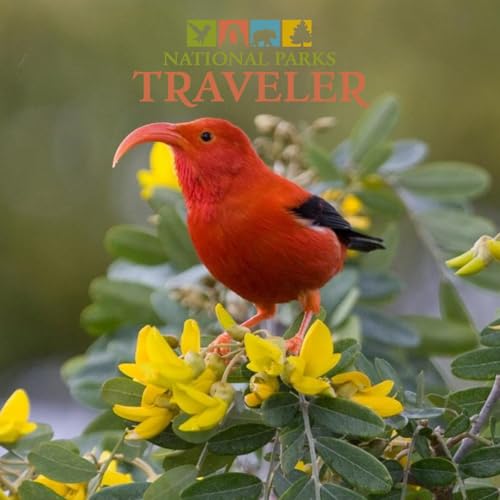
National Parks Traveler Podcast | The Fate of the Honeycreeper
Failed to add items
Add to basket failed.
Add to Wish List failed.
Remove from Wish List failed.
Follow podcast failed
Unfollow podcast failed

National Parks Traveler Podcast | The Fate of the Honeycreeper
-
Narrated by:
-
By:
About this listen
A dramatic battle is being waged on the flanks of Halealakā National Park to save rare Honeycreeper birds that exist only in Hawaii.
It's believed that the 50-odd known living or extinct species of honeycreepers all evolved from a single colonizing ancestor that arrived on Hawaii, the world's most remote island group, some three to five million years ago.
Threats to the birds began to surface around 500 A.D., when Polynesian colonists began to settle on the Pacific island chain. They began to clear most of the low elevation forests, inadvertently eating away at the birds' habitat. It's also thought that the Polynesians introduced the Pacific Rat to the islands, a predator that ate the birds' eggs.
The arrival of Europeans in the late 18th century accelerated the destruction of the birds' forest habitat.
Along with loss of habitat, the honeycreepers are falling victim to avian malaria, which is carried by mosquitoes, and which is almost always fatal to the birds. Today only 17 species of honeycreepers survive in the state, some with fewer than 500 birds remaining, and it's believed that many will be pushed to extinction within a decade if nothing is done.
In a bid to slow, if not reverse, the spread of avian malaria, the Maui Forest Bird Recovery Project is working to disrupt the reproduction of mosquitoes. Traveler associate editor Rita Beamish and Editor Kurt Repanshek recently sat down with Dr. Hanna Mounce, program director of the project, to learn about its work.