• From $28K Salary to $1M Net Worth: What I Got Wrong About Money (Andy Hill)
    Mar 20 2026

    Andy Hill hit a million-dollar net worth — and the first thing he did was sell part of his brokerage account and buy a Ford Mustang. It's the kind of decision that makes more sense once you understand how he got there.
    The host of the “Marriage Kids and Money” podcast and the author of Own Your Time, Hill grew up in Michigan learning early lessons about saving, investing, and building wealth. Guided by a mother who emphasized frugality and a father who built a career from the ground up, he developed a strong financial foundation — even as investing mistakes and market swings tested his path to financial independence.
    Chris Hill (no relation) talks with Andy about:
    - Buying a house at 22 with money he'd saved and invested — and why breaking even a decade later still stings
    - Falling in and out of love with investing, from tech mutual funds to a WWF stock purchase he'd rather forget
    - What he and his wife got wrong about money early in their marriage — and how 16 years later they're still figuring it out
    - The one investing move he wishes he'd made earlier — and why it requires almost no skill to pull off

    What's the last thing you splurged on? info@moneyunpluggedpod.com.
    Want to instantly improve your cooking? Go to dizzypigbbq.com and use the promo code “MONEY” to get 10% off your 1st order.
    Opening clip – “Grand Canyon”

    Show More Show Less
    33 mins
  • I Fell for a Ponzi Scheme in My 20s. Here’s What It Taught Me About Investing. (Laura Adams)
    Mar 13 2026

    Getting burned on a bad investment early in life can do one of two things: swear you off investing forever, or teach you exactly what kind of investor you want to become. For Laura Adams, it did the latter.
    Host of the Money Girl podcast — one of the longest-running personal finance podcasts in the world, with more than 1,000 episodes — Adams grew up in Charleston, SC, in a household where money was never discussed. That silence may be exactly why she became obsessed with it. Her earliest money memory involves sorting coins into paper wrappers for her father's business. Her first checking account came at age 12, when she begged her mother for one just so she could balance it.
    Chris Hill talks with Laura about:
    - How falling for a Ponzi scheme in her twenties turned her into a committed index investor who doesn't look back
    - Buying a struggling flooring business with her husband knowing nothing about flooring — and selling it four years later at a profit
    - The 2-year plan she and her husband made to eliminate their credit card debt as newlyweds, and why paying it off felt better than she expected
    - Why the money rules that help you build wealth can actually work against you when it's time to spend it
    What is something you bought that makes you happy? Tell us at info@moneyunpluggedpod.com.
    Want to find the best stocks and speed up your investing analysis? Try TIKR for free at tikr.com/unplugged
    Opening clip - "Succession"

    Show More Show Less
    32 mins
  • Why Hating Your Job Might Be the Best Thing That Ever Happened to You (Alison Fragale)
    Mar 6 2026

    The best job is one you love. The second best? One you hate.
    Organizational psychologist Alison Fragale learned this the hard way — trading a McKinsey consulting career she couldn't stand for a Stanford PhD and a calling she never would have found otherwise.
    A professor at UNC Kenan-Flagler Business School and author of the bestseller Likeable Badass, Fragale grew up in Pittsburgh shaped by a father who made sure his daughter never had to think twice about what she put in the grocery cart. That early imprint on money followed her through Dartmouth, into consulting, and eventually into a career spent studying how people earn power, status, and influence.
    She talks with Chris Hill about:
    - Why the people most stuck in their careers are neither miserable nor happy — and what to do about it
    - A financial concept she didn't encounter until her late thirties that completely changed how she thinks about giving
    - Why she bought the car she'd wanted for decades, immediately regretted it, and refuses to get rid of it anyway
    - The one habit she believes is both the most generous thing you can do for others AND the most strategic thing you can do for yourself
    Check out Alison's book Likeable Badass at alisonfragale.com.
    What's the last thing you splurged on? Tell us at info@moneyunpluggedpod.com.
    Go to ilovemarmar.com and use the promo code “MONEY” to get 10%.
    Opening clip – “Heist”

    Show More Show Less
    34 mins
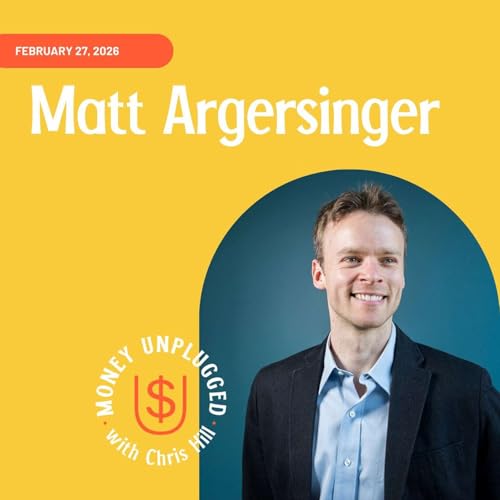
  • Dividend Stocks: The Investing Strategy Too Many People Ignore (Matt Argersinger)
    Feb 27 2026

    Dividend stocks don’t get the hype of high-growth tech names — but they’ve quietly delivered some of the market’s best long-term returns.
    Investor Matt Argersinger joins Chris Hill to break down why dividend-paying companies can outperform, why younger investors shouldn’t ignore them, and how the stigma around dividends began to fade. They discuss:
    - The myth that dividend stocks are “for retirees”
    - Losing his first $500 investing in a failed computer company
    - The shift in investor thinking after companies like Apple embraced dividends
    - When growth stocks make sense — and when they don’t

    Brew Markets is the best wrap-up of the day on Wall Street.
    Sign up for free at BrewMarkets.com/money

    What's the last thing you splurged on? Tell us info@moneyunpluggedpod.com
    Opening clip - "Chinatown"

    Show More Show Less
    36 mins
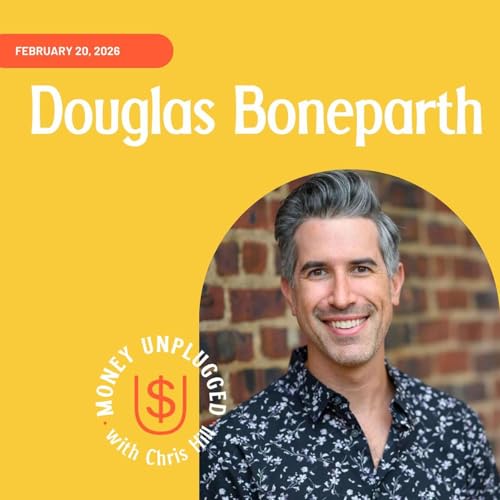
  • From Blockbuster to the Great Financial Crisis: Douglas Boneparth on Playing the Long Game
    Feb 20 2026

    What’s it like to launch a financial career at the worst possible moment?
    Douglas Boneparth, CFP and president of Bone Fide Wealth, moved to New York City in 2008 as Bear Stearns collapsed and the Great Financial Crisis began. But his money story started much earlier — in a household where personal finance was never taboo. He talks with Chris Hill about:
    - Early lessons in entrepreneurship
    - The challenge of leaving a family firm to build his own path
    - Managing student debt and New York City rent
    - An investing lesson he wishes he had learned earlier
    Opening clip – “Succession”

    Check out Money Together, the best-selling book Douglas wrote with his wife Heather.

    What’s a purchase you regret making?
    Share your story at info@moneyunpluggedpod.com

    Show More Show Less
    37 mins
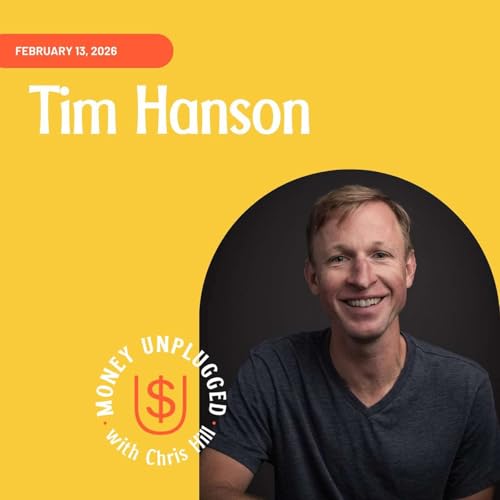
  • How to Think Like a Capital Allocator (Tim Hanson)
    Feb 13 2026

    Tim Hanson didn’t set out to become a capital allocator.
    Today he’s the President and CIO at Permanent Equity, helping steward long-term investments in private companies built to last. But his path to investing included playwriting, early stock picks, and lessons about money that started in childhood. Chris Hill talks with Tim about what separates investing from allocating capital — and why the distinction matters, as well as:
    - The first stock Tim ever bought (and what he learned from it)
    - How Permanent Equity thinks about holding businesses for decades
    - Raising kids who understand ownership
    - A surprising purchase that says more about capital discipline than you’d think

    Looking for the best wrap-up of the day on Wall Street? Sign up for the free daily Brew Markets email at BrewMarkets.com/money

    What’s the last thing you splurged on?
    Share your story at info@moneyunpluggedpod.com
    Opening clip - "Glengarry Glen Ross"

    Show More Show Less
    33 mins
  • Beth Pinsker on the Emotional Side of Money Decisions
    Feb 6 2026

    Personal finance isn’t just math—it’s memory, emotion, and lived experience.

    Chris Hill talks with MarketWatch columnist Beth Pinsker about why money decisions feel so hard, especially during life’s biggest transitions. Drawing from her work as a journalist and financial planner, Beth breaks down caregiving, taxes, and end-of-life planning in ways that actually make sense.
    They discuss:
    - How childhood money experiences shape adult behavior
    - What financial planners can—and can’t—help with during crises
    - Why “bad choices” are sometimes the only choices
    - What she learned about profit, inventory, and responsibility while illegally selling soft drinks on the beaches of Atlantic City

    Opening clip – “The Princess Bride”

    Beth’s new book, My Mother’s Money: A Guide to Financial Caregiving, can be found at BethPinsker.com.

    What’s the last thing you splurged on?
    Got a purchase you regret and still think about?
    Share your story at info@moneyunpluggedpod.com

    Show More Show Less
    32 mins
  • How Denise Coursey Learned Power, Independence, and ROI—Through Karate and Money
    Jan 30 2026

    Denise Coursey didn’t grow up talking about investing—but she did grow up learning respect for money.
    Raised in a blue-collar, union household, Denise became a first-generation college student, took early career risks as a writer and editor, and eventually became a small business owner. Along the way, she developed strong views on scarcity, financial independence, and why “having enough” doesn’t always quiet the money noise in your head.
    Chris Hill talks with Denise about:
    •Why karate became a lifelong practice—and eventually a business
    •Taking creative and career risks without a financial safety net
    •How separate bank accounts reduced money stress in her marriage
    •Redefining “splurging” as time, not dollars
    Opening clip – “Tom Papa: What A Day!”

    Want to find the best stocks and speed up your investing analysis? Try TIKR for free at tikr.com/unplugged

    More info about Denise's business at VirginiaDojo.com

    Send your questions and comments to info@moneyunpluggedpod.com

    Show More Show Less
    33 mins