

Is the Four-Year Crypto Cycle Dead?
Failed to add items
Add to basket failed.
Add to Wish List failed.
Remove from Wish List failed.
Follow podcast failed
Unfollow podcast failed

Is the Four-Year Crypto Cycle Dead?
-
Narrated by:
-
By:
About this listen
For years, crypto traders have lived and died by the halving clock. Boom. Bust. Rinse. Repeat.
But what if that old rhythm doesn’t work anymore?
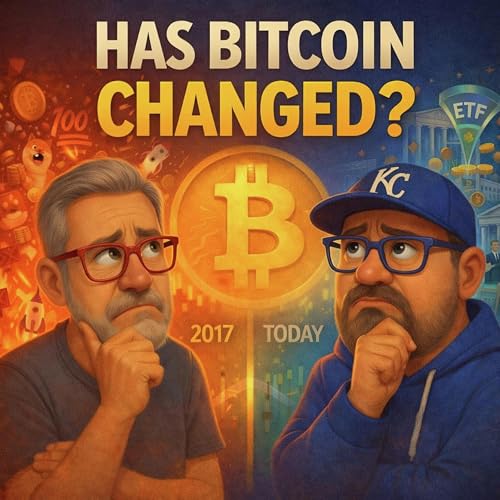
In Episode 798 of The Bad Crypto Podcast, Joel and Travis make the case that Bitcoin has officially graduated from “speculative science experiment” to institutional-grade asset class — and that changes everything.
We break down why this cycle looks nothing like the last ones, including:
• Why banks that mocked crypto are now quietly building custody, trading, and ETF pipelines
• How public companies, governments, and ETFs are soaking up Bitcoin supply
• Why institutional buying is far “stickier” than retail panic selling
• How regulation shifts (OCC, FDIC, Fed guidance) removed the biggest barriers between banks and Bitcoin
• Why the classic 80% crash may no longer be the default outcome
• What January and February could reveal about whether the cycle is truly broken
• Why Gen Z asking for crypto for Christmas might be the most bullish signal of all
We also dig into adoption curves, Bitcoin treasuries, ETF inflows, government holdings, and the uncomfortable reality that the market may have changed the rules while many traders are still playing the old game.
If you’re waiting for the “inevitable crash” so you can say “told you so”…
you might want to listen first.
Because Bitcoin doesn’t look like it’s leaving.
It looks like it’s settling in.
🎧 Episode 798 — from Puerto Rico to Dubai
📺 Watch on YouTube
🎙️ Listen wherever podcasts live
Stay bad.
Support the show: https://badcryptopodcast.com
See omnystudio.com/listener for privacy information.