Episodes

  • Why Nvidia builds open models with Bryan Catanzaro
    Feb 4 2026
    One of the big stories of 2025 for me was how Nvidia massively stepped up their open model program — more releases, higher quality models, joining a small handful of companies releasing datasets, etc. In this interview, I sat down with one of the 3 VP’s leading the effort of 500+ technical staff, Bryan Catanzaro, to discuss:* Their very impressive Nemotron 3 Nano model released in Dec. 2025, and the bigger Super and Ultra variants coming soon,* Why Nvidia’s business clearly benefits from them building open models,* How the Nemotron team culture was crafted in pursuit of better models,* Megatron-LM and the current state of open-source training software,* Career reflections and paths into AI research,* And other topics.The biggest takeaway I had from this interview is how Nvidia understands their unique roll as a company that and both build and directly capture the value they get from building open language models, giving them a uniquely sustainable advantage. Bryan has a beautiful analogy for open models this early in AI’s development, and how they are a process of creating “potential energy” for AI’s future applications.I hope you enjoy it!Guest: Bryan Catanzaro, VP Applied Deep Learning Research (ADLR), NVIDIA. X: @ctnzr, LinkedIn, Google Scholar.Listen on Apple Podcasts, Spotify, YouTube, and where ever you get your podcasts. For other Interconnects interviews, go here.Nemotron Model Timeline2019–2022 — Foundational Work* Megatron-LM (model parallelism framework that has become very popular again recently; alternatives: DeepSpeed, PyTorch FSDP). * NeMo Framework (NVIDIA’s end-to-end LLM stack: training recipes, data pipelines, evaluation, deployment).Nov 2023 — Nemotron-3 8B: Enterprise-ready NeMo models. Models: base, chat-sft, chat-rlhf, collection. Blog.Feb 2024 — Nemotron-4 15B: Multilingual LLM trained to 8T tokens. Paper.Jun 2024 — Nemotron-4 340B: Major open release detailing their synthetic data pipeline. Paper, blog. Models: Instruct, Reward. Jul–Sep 2024 — Minitron / Nemotron-Mini: First of their pruned models, pruned from 15B. Minitron-4B (base model), Nemotron-Mini-4B-Instruct. Paper, code.Oct 2024 — Llama-3.1-Nemotron-70B: Strong post-training on Llama 3.1 70B. Model, collection. Key dataset — HelpSteer2, paper.Mar–Jun 2025 — Nemotron-H: First hybrid Mamba-Transformer models for inference efficiency. Paper, research page, blog. Models: 8B, 47B, 4B-128K.May 2025 — Llama-Nemotron: Efficient reasoning models built ontop of Llama (still!). Paper.Sep 2025 — Nemotron Nano 2: 9B hybrid for reasoning, continuing to improve in performance. 12B base on 20T tokens (FP8 training) pruned to 9B for post-training. Report, V2 collection.Nov 2025 — Nemotron Nano V2 VL: 12B VLM. Report.Dec 2025 — Nemotron 3: Nano/Super/Ultra family, hybrid MoE, up to 1M context. Super/Ultra H1 2026. Nano: 25T tokens, 31.6B total / ~3.2B active, releases recipes + code + datasets. Papers: White Paper, Technical Report. Models: Nano-30B-BF16, Base, FP8.Nemotron’s Recent DatasetsNVIDIA began releasing substantially more data in 2025, including pretraining datasets — making them one of few organizations releasing high-quality pretraining data at scale (which comes with non-negligible legal risk).Pretraining DataCollection — CC-v2, CC-v2.1, CC-Code-v1, Code-v2, Specialized-v1, CC-Math-v1. Math paper: arXiv:2508.15096.Post-Training DataCore post-training dumps (SFT/RL blends):* Llama Nemotron Post-Training v1.1 (Apr 2025)* Nemotron Post-Training v1 (Jul 2025)* Nemotron Post-Training v2 (Aug 2025)2025 reasoning/code SFT corpora:* OpenMathReasoning (Apr 2025)* OpenCodeReasoning (Apr 2025), OpenCodeReasoning-2 (May 2025)* AceReason-1.1-SFT (Jun 2025)* Nemotron-Math-HumanReasoning (Jun 2025), Nemotron-PrismMath (Apr 2025)NeMo Gym RLVR datasets: CollectionNemotron v3 post-training (Dec 2025): CollectionHelpSteer (human feedback/preference):* HelpSteer (Nov 2023)* HelpSteer2 (Jun 2024)* HelpSteer3 (Mar 2025)And others, not linked here.Chapters* 00:00:00 Intro & Why NVIDIA Releases Open Models* 00:05:17 Nemotron’s two jobs: systems R&D + ecosystem support* 00:15:23 Releasing datasets, not just models* 00:22:25 Organizing 500+ people with “invitation, not control”* 0:37:29 Scaling Nemotron & The Evolution of Megatron* 00:48:26 Career Reflections: From SVMs to DLSS* 00:54:12 Lessons from the Baidu Silicon Valley AI Lab* 00:57:25 Building an Applied Research Lab with Jensen Huang * 01:00:44 Advice for Researchers & Predictions for 2026Transcript00:00:06 Nathan Lambert: Okay. Hey, Bryan. I’m very excited to talk about Nemotron. I think low-key, one of the biggest evolving stories in twenty-five of open models, outside the obvious things in China that everybody talks about, that gets a ton of attention. So th- thanks for coming on the pod.00:00:22 Bryan Catanzaro: Oh, yeah, it’s my honor.00:00:23 Nathan Lambert: So I wanted to start, and some of these questions are honestly ...
    Show More Show Less
    1 hr and 8 mins
  • Thoughts on the hiring market in the age of LLMs
    Jan 30 2026
    There’s a pervasive, mutual challenge in the job market today for people working in (or wanting to work in) the cutting edge of AI. On the hiring side, it often feels impossible to close, or even get interest from, the candidates you want. On the individual side, it quite often feels like the opportunity cost of your current job is extremely high — even if on paper the actual work and life you’re living is extremely good — due to the crazy compensation figures.For established tech workers, the hiring process in AI can feel like a bit of a constant fog. For junior employees, it can feel like a bit of a wall.In my role as a bit of a hybrid research lead, individual contributor, and mentor, I spend a lot of time thinking about how to get the right people for me to work with and the right jobs for my mentees.The advice here is shaped by the urgency of the current moment in LLMs. These are hiring practices optimized for a timeline of relevance that may need revisiting every 1-2 years as the core technology changes — which may not be best for long-term investment in people, the industry, or yourself. I’ve written separately about the costs of this pace, and don’t intend to carry this on indefinitely.The most defining feature of hiring in this era is the complexity and pace of progress in language models. This creates two categories. For one, senior employees are much more covetable because they have more context of how to work in and steer complex systems over time. It takes a lot of perspective to understand the right direction for a library when your team can make vastly more progress on incremental features given AI agents. Without vision, the repositories can get locked with too many small additions. With powerful AI tools I expect the impact of senior employees to grow faster than adding junior members to the team could. This view on the importance of key senior talent has been a recent swing, given my experiences and expectations for current and future AI agents, respectively:Every engineer needs to learn how to design systems. Every researcher needs to learn how to run a lab. Agents push the humans up the org chart.On the other side, junior employees have to prove themselves in a different way. The number one defining trait I look for in a junior engineering employee is an almost fanatical obsession with making progress, both in personal understanding and in modeling performance. The only way to learn how the sausage gets made is to do it, and to catch up it takes a lot of hard work in a narrow area to cultivate ownership. With sufficient motivation, a junior employee can scale to impact quickly, but without it, it’s almost replaceable with coding agents (or will be soon). This is very hard work and hard to recruit for. The best advice I have on finding these people is “vibes,” so I am looking for advice on how to find them too!For one, when I brought Florian Brand on to help follow open models for Interconnects, when I first chatted with him he literally said “since ChatGPT came out I’ve been fully obsessed with LLMs.” You don’t need to reinvent the wheel here — if it’s honest, people notice.For junior researchers, there’s much more grace, but that’s due to them working in an education institution first and foremost, instead of the understatedly brutal tech economy. A defining feature that creates success here is an obsession with backing up claims. So a new idea improves models, why? So our evaluation scores are higher, what does this look like in our harness? Speed of iteration follows from executing on this practice. Too many early career researchers try to build breadth of impact (e.g. collecting contributions on many projects) before clearly demonstrating, to themselves and their advisors, depth. The best researchers then bring both clarity of results and velocity in trying new ideas.Working in academia today is therefore likely to be a more nurturing environment for junior talent, but it comes with even greater opportunity costs financially. I’m regularly asked if one should leave a Ph.D. to get an actual job, and my decision criteria is fairly simple. If you’re not looking to become a professor and have an offer to do modeling research at a frontier lab (Gemini, Anthropic, OpenAI is my list) then there’s little reason to stick around and finish your Ph.D.The little reason that keeps people often ends up being personal pride in doing something hard, which I respect. It’s difficult to square these rather direct pieces of career advice with my other recommendations of choosing jobs based on the people, as you’ll spend a ton of your life with them, more than the content of what you’ll be doing. Choosing jobs based on people is one of the best ways to choose your job based on the so-called “vibes.”Working in a frontier lab in product as an alternative to doing a Ph.D. is a path to get absorbed in the corporate machine and not stand out, reducing ...
    Show More Show Less
    11 mins
  • Arcee AI goes all-in on open models built in the U.S.
    Jan 27 2026
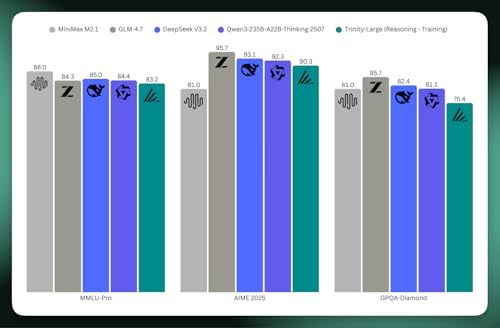
    Arcee AI is a the startup I’ve found to be taking the most real approach to monetizing their open models. With a bunch of experience (and revenue) in the past in post-training open models for specific customer domains, they realized they needed to both prove themselves and fill a niche by pretraining larger, higher performance open models built in the U.S.A. They’re a group of people that are most eagerly answering my call to action for The ATOM Project, and I’ve quickly become friends with them.Today, they’re releasing their flagship model — Trinity Large — as the culmination of this pivot. In anticipation of this release, I sat down with their CEO Mark McQuade, CTO Lucas Atkins, and pretraining lead, Varun Singh, to have a wide ranging conversation on:* The state (and future) of open vs. closed models,* The business of selling open models for on-prem deployments,* The story of Arcee AI & going “all-in” on this training run,* The ATOM project,* Building frontier model training teams in 6 months,* and other great topics. I really loved this one, and think you well too.The blog post linked above and technical report have many great details on training the model that I’m still digging into. One of the great things Arcee has been doing is releasing “true base models,” which don’t contain any SFT data or learning rate annealing. The Trinity Large model, an MoE with 400B total and 13B active tokens trained to 17 trillion tokens is the first publicly shared training run at this scale on B300 Nvidia Blackwell machines. As a preview, they shared the scores for the underway reasoning model relative to the who’s-who of today’s open models. It’s a big step for open models built in the U.S. to scale up like this. I won’t spoil all the details, so you still listen to the podcast, but their section of the blogpost on cost sets the tone well for the podcast, which is a very frank discussion on how and why to build open models:When we started this run, we had never pretrained anything remotely like this before.There was no guarantee this would work. Not the modeling, not the data, not the training itself, not the operational part where you wake up, and a job that costs real money is in a bad state, and you have to decide whether to restart or try to rescue it.All in—compute, salaries, data, storage, ops—we pulled off this entire effort for $20 million. 4 Models got us here in 6 months.That number is big for us. It’s also small compared to what frontier labs spend just to keep the lights on. We don’t have infinite retries.Once I post this, I’m going to dive right into trying the model, and I’m curious what you find too.Listen on Apple Podcasts, Spotify, YouTube, and where ever you get your podcasts. For other Interconnects interviews, go here.GuestsLucas Atkins —X,LinkedIn — CTO; leads pretraining/architecture, wrote the Trinity Manifesto.Mark McQuade — X, LinkedIn — Founder/CEO; previously at Hugging Face (monetization), Roboflow. Focused on shipping enterprise-grade open-weight models + tooling.Varun Singh — LinkedIn — pretraining lead.Most of this interview is conducted with Lucas, but Mark and Varun make great additions at the right times.LinksCore:* Trinity Large (400B total, 13B active) collection, blog post. Instruct model today, reasoning models soon.* Trinity Mini, 26B total 3B active (base, including releasing pre-anneal checkpoint)* Trinity Nano Preview, 6B total 1B active (base)* Open Source Catalog: https://www.arcee.ai/open-source-catalog* API Docs and Playground (demo)* Socials: GitHub, Hugging Face, X, LinkedIn, YouTubeTrinity Models:* Trinity models page: https://www.arcee.ai/trinity* The Trinity Manifesto (I recommend you read it): https://www.arcee.ai/blog/the-trinity-manifesto* Trinity HF collection — (Trinity Mini & Trinity Nano Preview)Older models:* AFM-4.5B (and base model) — their first open, pretrained in-house model (blog post).* Five open-weights models (blog): three production models previously exclusive to their SaaS platform plus two research models, released as they shifted focus to AFM — Arcee-SuperNova-v1, Virtuoso-Large, Caller, GLM-4-32B-Base-32K, HomunculusOpen source tools:* MergeKit — model merging toolkit (LGPL license return)* DistillKit — knowledge distillation library* EvolKit — synthetic data generation via evolutionary methodsRelated:* Datology case study w/ ArceeChapters* 00:00:00 Intro: Arcee AI, Trinity Models & Trinity Large* 00:08:26 Transitioning a Company to Pre-training* 00:13:00 Technical Decisions: Muon and MoE* 00:18:41 Scaling and MoE Training Pain* 00:23:14 Post-training and RL Strategies* 00:28:09 Team Structure and Data Scaling* 00:31:31 The Trinity Manifesto: US Open Weights* 00:42:31 Specialized Models and Distillation* 00:47:12 Infrastructure and Hosting 400B* 00:50:53 Open Source as a Business Moat* 00:56:31 Predictions: Best Model in 2026* 01:02:29 Lightning Round & ...
    Show More Show Less
    1 hr and 12 mins
  • Get Good at Agents
    Jan 21 2026
    Two weeks ago, I wrote a review of how Claude Code is taking the AI world by storm, saying that “software engineering is going to look very different by the end of 2026." That article captured the power of Claude as a tool and a product, and I still stand by it, but it undersold the changes that are coming in how we use these products in careers that interface with software. The more personal angle was how “I’d rather do my work if it fits the Claude form factor, and soon I’ll modify my approaches so that Claude will be able to help.” Since writing that, I’m stuck with a growing sense that taking my approach to work from the last few years and applying it to working with agents is fundamentally wrong. Today’s habits in the era of agents would limit the uplift I get by micromanaging them too much, tiring myself out, and setting the agents on too small of tasks. What would be better is more open ended, more ambitious, more asynchronous. I don’t yet know what to prescribe myself, but I know the direction to go, and I know that searching is my job. It seems like the direction will involve working less, spending more time cultivating peace, so the brain can do its best directing — let the agents do most of the hard work.Since trying Claude Code with Opus 4.5, my work life has shifted closer to trying to adapt to a new way of working with agents. This new style of work feels like a larger shift than the era of learning to work with chat-based AI assistants. ChatGPT let me instantly get relevant information or a potential solution to the problems I was already working on. Claude Code has me considering what should I work on now that I know I can have AI independently solve or implement many sub-components. Every engineer needs to learn how to design systems. Every researcher needs to learn how to run a lab. Agents push the humans up the org chart.I feel like I have an advantage by being early to this wave, but no longer feel like just working hard will be an lasting edge. When I can have multiple agents working productively in parallel on my projects, my role is shifting more to pointing the army rather than using the power-tool. Pointing the agents more effectively is far more useful than me spending a few more hours grinding on a problem. My default workflow now is GPT 5 Pro for planning, Claude Code with Opus 4.5 for implementation. I often have Claude Code pass information back to GPT 5 Pro for a deep search when stuck with a very detailed prompt. Codex with GPT 5.2 on xhigh thinking effort alone feels very capable, more meticulous than Claude even, but I haven’t yet figured out how to get the best out of it. GPT Pro feels itself to be a strong agent trapped in the wrong UX — it needs to be able to think longer and have a place to work on research tasks.It seems like all of my friends (including the nominally “non-technical” ones) have accepted that Claude can rapidly build incredible, bespoke software for you. Claude updated one of my old research projects to uv so it’s easier to maintain, made a verification bot for my Discord, crafted numerous figures for my RLHF book, feels close to landing a substantial feature in our RL research codebase, and did countless other tasks that would’ve taken me days. It’s the thing de jour — tell your friends and family what trinket you built with Claude. It undersells what’s coming.I’ve taken to leaving Claude Code instances running on my DGX Spark trying to implement new features in our RL codebase when I’m at dinner or work. They make mistakes, they catch most of their own mistakes, and they’re fairly slow too, but they’re capable. I can’t wait to go home and check on what my Claudes were up to.Interconnects is a reader-supported publication. Consider becoming a subscriber.The feeling that I can’t shake is a deep urgency to move my agents from working on toy software to doing meaningful long-term tasks. We know Claude can do hours, days, or weeks, of fun work for us, but how do we stack these bricks into coherent long-term projects? This is the crucial skill for the next era of work.There are no hints or guides on working with agents at the frontier — the only way is to play with them. Instead of using them for cleanup, give them one of your hardest tasks and see what it gets stuck on, see what you can use it for.Software is becoming free, good decision making in research, design, and product has never been so valuable.Being good at using AI today is a better moat than working hard.Here are a collection of pieces that I feel like suitably grapple with the coming wave or detail real practices for using agents. It’s rare that so many of the thinkers in the AI space that I respect are all fixated on a single new tool, a transition period, and a feeling of immense change:* Import AI 441: My agents are working. Are yours? This helped me motivate to write this and focus on how important of a moment this is.* Steve Newman ...
    Show More Show Less
    5 mins
  • Use multiple models
    Jan 11 2026
    I’ll start by explaining my current AI stack and how it’s changed in recent months. For chat, I’m using a mix of:* GPT 5.2 Thinking / Pro: My most frequent AI use is getting information. This is often a detail about a paper I’m remembering, a method I’m verifying for my RLHF Book, or some other niche fact. I know GPT 5.2 can find it if it exists, and I use Thinking for queries that I think are easier and Pro when I want to make sure the answer is right. Particularly GPT Pro has been the indisputable king for research for quite some time — Simon Willison’s coining of it as his “research goblin” still feels right.I never use GPT 5 without thinking or other OpenAI chat models. Maybe I need to invest more in custom instructions, but the non-thinking models always come across a bit sloppy relative to the competition out there and I quickly churn. I’ve heard gossip that the Thinking and non-Thinking GPT models are even developed by different teams, so it would make sense that they can end up being meaningfully different.I also rarely use Deep Research from any provider, opting for GPT 5.2 Pro and more specific instructions. In the first half of 2025 I almost exclusively used ChatGPT’s thinking models — Anthropic and Google have done good work to win back some of my attention.* Claude 4.5 Opus: Chatting with Claude is where I go for basic code questions, visualizing simple data, and getting richer feedback on my work or decisions. Opus’s tone is particularly refreshing when trying to push the models a bit (in a way that GPT 4.5 used to provide for me, as I was a power user of that model in H1 2025). Claude Opus 4.5 isn’t particularly fast relative to a lot of models out there, but when you’re used to using the GPT Thinking models like me, it feels way faster (even with extended thinking always on, as I do) and sufficient for this type of work.* Gemini 3 Pro: Gemini is for everything else — explaining concepts I know are well covered in the training data (and minor hallucinations are okay, e.g. my former Google rabbit holes), multimodality, and sometimes very long-context capabilities (but GPT 5.2 Thinking took a big step here, so it’s a bit closer). I still open and use the Gemini app regularly, but it’s a bit less locked-in than the other two.Relative to ChatGPT, sometimes I feel like the search mode of Gemini is a bit off. It could be a product decision with how the information is presented to the user, but GPT’s thorough, repeated search over multiple sources instills a confidence I don’t get from Gemini for recent or research information.* Grok 4: I use Grok ~monthly to try and find some piece of AI news or Alpha I recall from browsing X. Grok is likely underrated in terms of its intelligence (particularly Grok 4 was an impressive technical release), but it hasn’t had sticky product or differentiating features for me.For images I’m using a mix of mostly Nano Banana Pro and sometimes GPT Image 1.5 when Gemini can’t quite get it. For coding, I’m primarily using Claude Opus 4.5 in Claude Code, but still sometimes find myself needing OpenAI’s Codex or even multi-LLM setups like Amp. Over the holiday break, Claude Opus helped me update all the plots for The ATOM Project, which included substantial processing of our raw data from scraping HuggingFace, perform substantive edits for the RLHF Book (where I felt it was a quite good editor when provided with detailed instructions on what it should do), and other side projects and life organization tasks. I recently published a piece explaining my current obsession with Claude Opus 4.5, I recommend you read it if you haven’t had the chance:A summary of this is that I pay for the best models and greatly value the marginal intelligence over speed — particularly because, for a lot of the tasks I do, I find that the models are just starting to be able to do them well. As these capabilities diffuse in 2026, speed will become more of a determining factor in model selection.Peter Wildeford had a post on X with a nice graphic that reflected a very similar usage pattern:Across all of these categories, it doesn’t feel like I could get away with just using one of these models without taking a substantial haircut in capabilities. This is a very strong endorsement for the notion of AI being jagged — i.e. with very strong capabilities spread out unevenly — while also being a bit of an unusual way to need to use a product. Each model is jagged in its own way. Through 2023, 2024, and the earlier days of modern AI, it quite often felt like there was always just one winning model and keeping up was easier. Today, it takes a lot of work and fiddling to make sure you’re not missing out on capabilities.The working pattern that I’ve formed that most reinforces this using multiple models era is how often my problem with an AI model is solved by passing the same query to a peer model. Models get stuck, some can’t find bugs, ...
    Show More Show Less
    7 mins
  • Claude Code Hits Different
    Jan 9 2026
    There is an incredible amount of hype for Claude Code with Opus 4.5 across the web right now, which I for better or worse entirely agree with. Having used coding agents extensively for the past 6-9 months, where it felt like sometimes OpenAI’s Codex was the best and sometimes Claude, there was some meaningful jump over the last few weeks. The jump is well captured by this post, which called it the move of “software creation from an artisanal, craftsman activity to a true industrial process.” Translation: Software is becoming free and human design, specification, and entrepreneurship is the only limiting factor.What is odd is that this latest Opus model was released on November 24, 2025, and the performance jump in Claude Code seemed to come at least weeks after its integration — I wouldn’t be surprised if a small product change unlocked massive real (or perceived) gains in performance.Interconnects is a reader-supported publication. Consider becoming a subscriber.The joy and excitement I feel when using this latest model in Claude Code is so simple that it necessitates writing about it. It feels right in line with trying ChatGPT for the first time or realizing o3 could find any information I was looking for, but in an entirely new direction. This time, it is the commodification of building. I type and outputs are constructed directly. Claude’s perfect mix of light sycophancy, extreme productivity, and an elegantly crafted application has me coming up with things to do with Claude. I’d rather do my work if it fits the Claude form factor, and soon I’ll modify my approaches so that Claude will be able to help. In a near but obvious future I’ll just manage my Claudes from my phone at the coffee shop.Where Claude is an excellent model, maybe the best, its product is where the magic happens for building with AI that instills confidence. We could see the interfaces the models are used in being so important to performance, such that Anthropic’s approach with Claude feels like Apple’s integration of hardware, software, and everything in between. This sort of magical experience is not one I expect to be only buildable by Anthropic — they’re just the first to get there. The fact that Claude makes people want to go back to it is going to create new ways of working with these models and software engineering is going to look very different by the end of 2026. Right now Claude (and other models) can replicate the most-used software fairly easily. We’re in a weird spot where I’d guess they can add features to fairly complex applications like Slack, but there are a lot of hoops to jump through in landing the feature (including very understandable code quality standards within production code-bases), so the models are way easier to use when building from scratch than in production code-bases. This dynamic amplifies the transition and power shift of software, where countless people who have never fully built something with code before can get more value out of it. It will rebalance the software and tech industry to favor small organizations and startups like Interconnects that have flexibility and can build from scratch in new repositories designed for AI agents. It’s an era to be first defined by bespoke software rather than a handful of mega-products used across the world. The list of what’s already commoditized is growing in scope and complexity fast — website frontends, mini applications on any platform, data analysis tools — all without having to know how to write code.I expect mental barriers people have about Claude’s ability to handle complex codebases to come crashing down throughout the year, as more and more Claude-pilled engineers just tell their friends “skill issue.” With these coding agents all coming out last year, the labs are still learning how to best train models to be well-expressed in the form factor. It’ll be a defining story of 2026 as the commodification of software expands outside of the bubble of people deeply obsessed with AI. There are things that Claude can’t do well and will take longer to solve, but these are more like corner cases and for most people immense value can be built around these blockers. The other part that many people will miss is that Claude Code doesn’t need to be restricted to just software development — it can control your entire computer. People are starting to use it for managing their email, calendars, decision making, referencing their notes, and everything in between. The crucial aspect is that Claude is designed around the command line interface (CLI), which is an open door into the digital world. The DGX Spark on my desk can be a mini AI research and development station managed by Claude.This complete interface managing my entire internet life is the beginnings of current AI models feeling like they’re continually learning. Whenever Claude makes a mistake or does something that doesn’t match your taste, dump a...
    Show More Show Less
    5 mins
  • Open models: Hot or Not with Nathan Lambert & Florian Brand
    Dec 18 2025

    Nathan sits down with Florian, our open model analyst to get spicy into debates of which labs won and lost momentum in open models of 2025. Reflection 70B, Huawei repackaging someone else's model as their own, the fall of Llama — no drama is left unturned. We also dig into the nuances that we didn't get to in our post, predict GPT-OSS 2, the American v. China balance at the end of 2026, and many other fun topics.

    Enjoy & let us know if we should do more of this.

    For the full year in review post, and to see our tier list, click here:

    Watch on YouTube here:


    This is a public episode. If you'd like to discuss this with other subscribers or get access to bonus episodes, visit www.interconnects.ai/subscribe
    Show More Show Less
    38 mins
  • New Talk: Building Olmo 3 Think
    Dec 10 2025

    It’s finally here! The public (and most complete) version of my talk covering every stage of the process to build Olmo 3 Think (slides are available). I’ve been giving this, improving it, and getting great feedback at other venues such as The Conference on Language Modeling (COLM) & The PyTorch Conference.This involves changes and new considerations of every angle of the stack, from pretraining, evaluation, and of course post-training.

    Most of the talk focuses on reinforcement learning infrastructure and evaluating reasoning models, with quick comments on every training stage. I hope you enjoy it, and let us know what to improve in the future!

    Chapters

    * 00:00:00 Introduction

    * 00:06:30 Pretraining Architecture

    * 00:09:25 Midtraining Data

    * 00:11:08 Long-context Necessity

    * 00:13:04 Building SFT Data

    * 00:20:05 Reasoning DPO Surprises

    * 00:24:47 Scaling RL

    * 00:41:05 Evaluation Overview

    * 00:48:50 Evaluation Reflections

    * 01:00:25 Conclusions

    Here’s the YouTube link:


    This is a public episode. If you'd like to discuss this with other subscribers or get access to bonus episodes, visit www.interconnects.ai/subscribe
    Show More Show Less
    1 hr and 2 mins