• EP 25: AI in Visual Art - Midjourney, DALL-E, and the Copyright Battlefield
    Feb 17 2026

    The visual art world is being turned upside down by AI image generators, and the legal battles are just beginning. In June 2025, Disney, Universal, and Warner Brothers sued Midjourney for what they called "a bottomless pit of plagiarism." Warner Brothers followed in September, accusing the platform of theft involving Superman, Batman, and Wonder Woman. This episode explores the collision between AI-powered creativity and intellectual property rights that's reshaping the entire industry.

    Sam and Mac break down the three dominant AI image generators—Midjourney (for artistry), DALL-E 3 (for precision), and Stable Diffusion (for control)—and examine why they've become both indispensable tools and legal targets. These platforms can generate photorealistic, professionally usable images in seconds from simple text prompts, but the question remains: is it innovation or infringement?

    Beyond the legal drama, this episode tackles the fundamental shift happening in creative work. When AI can generate thousands of game assets, concept art, or marketing materials in seconds for free, how do human artists compete? The answer isn't simple resistance—it's adaptation. We explore how graphic designers are developing hybrid workflows, combining traditional techniques with AI layers to maintain authenticity while achieving 100x productivity gains.

    The conversation also addresses the elephant in the room: the very definition of creativity is changing. In today's world, prompt engineering and contextual understanding are becoming core creative skills. Artists like Lena are fine-tuning AI models to maintain consistent personal styles while generating assets at scale. Companies like Adobe Firefly are training exclusively on licensed data to offer commercially safe alternatives, even if they sacrifice some artistic quality.

    Key topics covered:

    • What Midjourney, DALL-E 3, and Stable Diffusion are and how they differ

    • The June and September 2025 lawsuits from Disney, Universal, and Warner Brothers

    • How AI image generation actually works: from prompt to photorealistic output

    • The 100x productivity gains transforming graphic design and concept art workflows

    • Why 80% of social media content is now AI-generated

    • How human artists can compete: specialization, intention, and storytelling

    • The shift in what "creativity" means in the AI era

    • Hybrid workflows: balancing traditional techniques with AI augmentation

    • Ethical AI approaches: Adobe Firefly's licensed training data model

    • Compliance considerations: why you should never generate images of celebrities without consent

    • The $432,500 AI artwork sold at Christie's and what it means for the market

    • Why these lawsuits will take years but won't stop technological progress

    This episode doesn't shy away from controversy. We acknowledge both the revolutionary potential of AI tools and the legitimate concerns about authenticity, compliance, and the displacement of traditional creative work. Whether you're a graphic designer navigating this transition, a business leader evaluating AI tools, or simply someone fascinated by how technology is redefining creativity itself, this conversation offers essential insights into an industry in flux.

    Show More Show Less
    16 mins
  • EP 24: Sora Shocks Hollywood: The $1 Billion Peace Treaty
    Feb 16 2026

    In December 2025, Disney did the unthinkable: they paid OpenAI $1 billion in equity and licensed 200+ characters to Sora, OpenAI's revolutionary text-to-video AI model. This episode unpacks the seismic deal that's reshaping Hollywood's future and transforming how entertainment gets made.

    Sam and Mac explore how Sora went from terrifying Hollywood studios to becoming their partner in less than a year. Discover why Bob Iger made this bold move, how Disney Plus is evolving from a passive viewing platform to an active creation platform, and what it means when producers like Tyler Perry pause $800 million studio expansions after seeing what AI can do.

    But this revolution comes with a human cost. We examine the darker side of this transformation: 75% of film companies adopting AI have reduced or eliminated jobs, with over 100,000 entertainment jobs potentially disrupted by 2026. Former Disney animators call it "soulless exploitation," while Hollywood directors claim they no longer need Tom Cruise or Brad Pitt, just an AI actor and a prompt.

    Yet resistance remains. Filmmakers like Guillermo del Toro are drawing battle lines, insisting movies should be "made by humans for humans." As the industry splits between AI-embracing innovators and authenticity-defending traditionalists, audiences face a choice: what are they willing to pay for?

    Key topics covered:

    • What Sora is and why it hit #1 on the Apple Store immediately after launch

    • Disney's $1 billion equity deal and licensing of 200+ characters to OpenAI

    • The shift from opt-out to opt-in after backlash over unauthorized character use

    • How Disney Plus is becoming a creator platform, not just a viewing platform

    • Why OpenAI won the Hollywood partnership race over Runway and Google

    • The economic reality: same production quality at one-third the price

    • Job displacement across VFX artists, set designers, background actors, and location scouts

    • The generational divide: AI-native audiences versus authenticity-seeking traditionalists

    • Speed of transformation: from "this is theft" to "$1 billion partnership" in under a year

    This episode offers an unflinching look at how AI is disrupting one of the world's most creative industries, examining both the unprecedented opportunities and the very real human consequences of this technological revolution.

    TAGS:

    OpenAI Sora, Disney AI, Hollywood AI, AI Video Generation, Text-to-Video AI, Entertainment Industry, AI Disruption, Bob Iger, Tyler Perry, Movie Production, VFX AI, AI Actors, Content Creation, Generative AI, Film Industry Future, AI Jobs Impact, Creator Economy, Disney Plus, Animation AI

    Show More Show Less
    14 mins
  • EP 23: AI Music Revolution: From Lawsuit to Licensing Deals
    Feb 15 2026

    The music industry went from trying to shut down AI music generators to partnering with them in less than a year. In this episode, Sam and Mac explore the explosive transformation of music creation through AI, examining how companies like Suno (generating 7 million songs daily) and Udio went from facing $500 million lawsuits from Sony, Universal, and Warner to securing landmark licensing agreements.

    Discover how professional songwriters are now embracing tools that seemed impossible just two years ago, why the Recording Academy CEO admits "every songwriter and producer I know has used Suno," and what this means for the future of musical creativity. We break down the shift from resistance to collaboration, explore new freelance professions emerging from AI music tools, and debate the line between amplifying human creativity and replacing it.

    Key topics covered:

    • Suno's $250M raise at $2.45B valuation and unprecedented music generation scale

    • The legal battle that changed everything: from copyright lawsuits to licensing partnerships

    • How AI music tools actually work and what the creative experience is like

    • Mixed reactions from traditional musicians versus innovation-embracing creators

    • The opt-in model and how artists maintain control over their work

    • New career opportunities and the democratization of music production

    • The future of live music and why it's becoming more valuable

    • AI-generated music avatars and virtual performances on the horizon

    Whether you're a musician, music lover, or simply fascinated by how AI is reshaping creative industries, this episode offers an essential look at the AI music revolution happening right now.

    TAGS:

    AI Music, Suno, Udio, Music Industry, AI Licensing, Copyright Law, Music Technology, Generative AI, Creative AI, Music Production, Songwriter Tools, Universal Music, Sony Music, Warner Music, AI Innovation, Music Future, Live Music, AI Avatars

    EPISODE LENGTH: ~20 minutes

    Show More Show Less
    20 mins
  • EP 22: The Future of AI Policy: Emerging Challenges and What Comes Next
    Feb 12 2026

    AI moves fast; laws struggle to keep up. In this episode of Inside Assemble AI, Mac Goswami and Sam Dey tackle the most pressing questions about the future of AI policy—from Artificial General Intelligence (AGI) that could exceed human capabilities to the murky liability questions around autonomous AI agents.

    What happens when AI agents cause harm? Who's liable - the developer, the deployer, or the user? Current regulations weren't designed for systems that can make independent decisions, negotiate contracts, or interact with other AI systems. The legal framework is unclear and complex, and we're already behind.

    The episode explores the double-edged sword of open source AI: it fosters innovation and democratizes access, but it also complicates control and regulation. How do you govern models that anyone can download, modify, and deploy? The traditional regulatory playbook doesn't work when the technology is freely distributed.

    Key insight: "AI policy will evolve as rapidly as AI itself." This isn't a one-time regulatory fix—it's a continuous process of adaptation, learning, and cooperation. Current regulations are already inadequate for AGI scenarios, and we need frameworks that can flex with technological advancement rather than break under it.

    The conversation emphasizes that public participation is crucial in shaping AI policy. These decisions affect everyone, and the dialogue can't be left only to technologists and policymakers.

    Topics covered: AGI implications for humanity, AI agent liability frameworks, open source AI governance paradox, synthetic content detection and regulation, global cooperation mechanisms, technology governance evolution, continuous regulatory adaptation

    Subscribe to Inside Assemble AI where AI, deep tech, and science meet storytelling. Stay curious and build responsibly.

    Show More Show Less
    15 mins
  • EP 21: The Global AI Regulatory Chessboard: How Different Regions Approach AI Governance
    Feb 8 2026

    The EU has its AI Act. The US has Biden's executive order followed by AI Action Plan released last year. China has something entirely different. In this episode, Sam and Mac zoom out to examine the global landscape of AI regulation—and it's not just about different rules, it's about competing visions of technology and society.

    What you'll learn:

    • US sectoral approach: Different agencies (FDA, FTC, EEOC) regulate AI in their domains—flexibility but fragmentation
    • China's radically different model: Algorithm registration, content filtering aligned with socialist values, state oversight
    • Middle-path approaches: UK's pro-innovation framework, Canada's EU-aligned AIDA proposal, Singapore's voluntary incentives
    • Is the Global South being left behind? Risk of regulatory colonialism from Brussels and Washington
    • Regulatory convergence vs fragmentation: Shared principles (transparency, accountability, fairness) but wildly different implementation
    • Data localization challenges: China, Russia, Indonesia require local storage—making global AI models harder to train

    Critical flashpoints:

    • Content moderation: What counts as "harmful" varies drastically by country
    • Technical standards: ISO, IEEE, NIST developing frameworks, but who sets standards matters geopolitically
    • Market fragmentation: Chinese AI companies don't operate in the West; Western companies avoid China

    For AI builders and startups: Design for the most stringent requirements you expect. Build in privacy, transparency, and accountability from the start. If you want EU customers, you comply with EU rules—regardless of where you're based. Focus on your target market first for validation, then expand compliance as you scale.

    Key insight: These aren't just regulatory differences—they're geopolitical choices that shape what gets built, how it works, who benefits, and what risks we accept.

    Show More Show Less
    14 mins
  • Ep 20: AI Compliance in Practice - Navigating Data Governance in AI
    Feb 6 2026

    Data governance isn't sexy, but it's what makes or breaks your AI strategy. In this episode, Sam and Mac tackle the tactical reality of what happens inside companies trying to comply with AI regulations while keeping data governance practices intact.

    What you'll learn:

    • Why you can't have compliant AI without proper data governance
    • Data lineage: tracking where your data came from, how it's processed, and where it ends up
    • Real-world bias example: How historical hiring data can violate EU AI Act principles
    • The challenge of GDPR's "right to be forgotten" when data is baked into neural networks
    • Model governance across the entire lifecycle—from selection to deployment monitoring
    • Why human oversight remains critical in high-risk systems like loan decisions
    • How smaller companies can stay compliant without enterprise-level budgets

    Key frameworks covered:

    ✓ Data lineage and chain of custody

    ✓ Audit trails throughout the AI lifecycle

    ✓ Model cards for documentation (used by Google, Microsoft, Meta, Amazon)

    ✓ Post-deployment monitoring: data drift, concept drift, and bias detection

    ✓ Human-in-the-loop requirements for consequential decisions

    The unsexy truth: Compliance as a service companies are emerging to help startups navigate these requirements. Trust isn't just a nice-to-have—it's becoming a competitive advantage.

    Show More Show Less
    15 mins
  • EP 19: Understanding the EU AI Act - The World's First Comprehensive AI Law
    Feb 5 2026

    The EU AI Act became law in 2024, and even if you're not in Europe, it's going to affect how you build with AI. In this episode, Sam and Mac break down the world's first comprehensive AI regulation—from banned applications to high-risk use cases that require strict oversight.

    What you'll learn:

    • The four-tier risk framework: unacceptable, high, limited, and minimal risk
    • Why this matters for your AI projects (hint: think GDPR's global impact)
    • How enterprises balance innovation with compliance
    • Practical implementation strategies from the frontlines
    • What "the right to be forgotten" means when data is baked into neural networks

    Whether you're building AI applications, leading data teams, or navigating enterprise AI governance, this episode gives you the framework to implement AI responsibly while maintaining innovation velocity.

    Timeline rollout: Bans effective early 2025, general purpose AI requirements mid-2025, full high-risk compliance by mid-2026.

    Show More Show Less
    15 mins
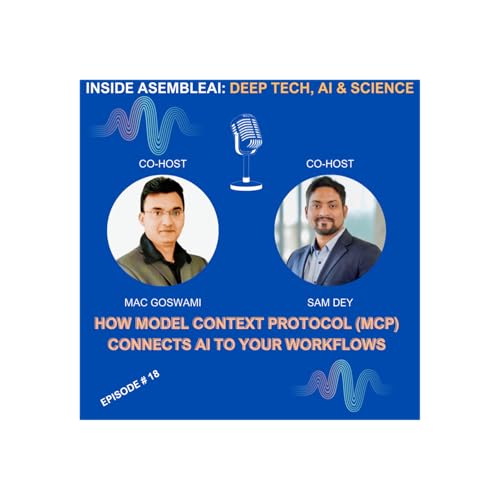
  • Ep 18: How Model Context Protocol (MCP) Connects AI to Your Workflows
    Feb 4 2026

    Mac and Sam break down Model Context Protocol (MCP)—the universal standard transforming how AI connects to tools, data, and workflows. Think of it as the "USB-C moment" for AI: plug-and-play integration that eliminates custom builds for every system.

    Discover what MCP actually is, how it enables seamless AI connections across your tech stack, real-world use cases for developers and enterprises, and why regulated industries are taking notice.

    Key Topics:

    • The shift from custom integrations to standardized protocols
    • Practical implementation strategies
    • Enterprise and regulated industry applications
    • What MCP solves (and its limitations)

    Perfect for: AI developers, enterprise teams, tech leaders in regulated industries, and anyone curious about the future of AI tooling.

    Key Insight: MCP isn't about making AI smarter—it's about making AI connections smarter.

    Resources: MCP documentation, weekly insights, and community links at asembleai.substack.com

    Show More Show Less
    35 mins