How do we recognize a face?
Most of us do it effortlessly, thousands of times a day. But the process behind that simple act is extraordinarily complex. The human brain has specialized systems devoted specifically to faces, allowing us to recognize identity, emotion, familiarity, and social meaning in fractions of a second.
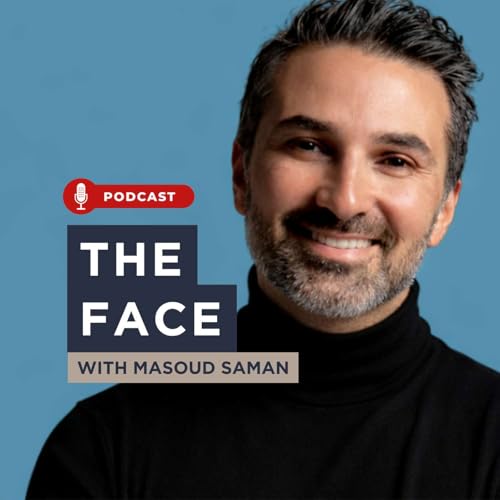
In this episode of The Face Podcast, Masoud Saman speaks with Dr. Marlene Behrmann, Professor of Ophthalmology and Psychology at the University of Pittsburgh and one of the world’s leading researchers in visual cognition and face perception.
Dr. Behrmann has spent decades studying how the brain processes faces and what happens when those systems are disrupted. Her work has helped shape our understanding of conditions such as prosopagnosia, commonly known as face blindness, where individuals lose the ability to recognize even familiar faces.
In this conversation, they explore:
• Why faces are so important in human society
• How the brain develops the ability to recognize thousands of faces
• What happens when that ability breaks down
• The neurological basis of prosopagnosia
• Whether face recognition abilities can be retrained or recovered
They also discuss a fascinating question relevant to both neuroscience and aesthetic surgery:
What makes a face recognizable as itself?
Because while the human face can change with age, illness, or surgery, the brain’s sense of identity often depends on subtle patterns that go far beyond individual features.
Host: Masoud Saman, MD
Facial Plastic Surgeon — New York
The Face Podcast explores the science, psychology, and meaning of the human face through conversations with leading researchers, artists, and thinkers.
New episodes available on Spotify, Apple Podcasts, and YouTube.


 32 mins