Episodes

  • Episode 3: Food of our Grandmothers
    Dec 25 2025
    December 25, 2025 - 5 Tevet 5786“Food is our grandmothers’ love language”Episode SummaryIn this episode we delve into memories deeply associated with the kitchen, from the aromas and tastes to the wisdom and culture passed down while cooking. Our grandmothers poured hours into making food to fill the stomachs and hearts of their descendants, but it wasn’t just that – it was hours spent with other women, supporting each other and lifting each other up. Join us as we delve into these memories and discuss how we keep this culture alive. Please like, comment, or leave a review on your podcast platform or send us an email at ayunivoices@gmail.com Your encouragement helps us carry these ancestral stories into the world — story by story, grandmother by grandmother. Share Your Story Every family holds a universe of memory. If you’ve carried a song, a story, a proverb, a photograph, a silence — we welcome you to share it with us at ayunivoices@gmail.com Stay Connected Instagram: @ayuni_voices Support Our Voices Ayuni is a labor of heart and heritage. Become a supporter: Your contribution helps us document what was almost forgotten — and amplify what must be remembered. www.tinyurl.com/JuNiTDiDonate Sponsor an episode: reach out at ayunivoices@gmail.com. Stay Connected- Instagram: @ayunivoices- YouTube: @JewishUnityDiversity- Jewish Unity Through Diversity registration: https://www.unitytdiversity.com/contact-donations Sarah’s Nana’s T’bit Recipe: 1. Chicken Stuffing - Inside Rice Ingredients: 1 cup Jasmine rice (rinsed and soaked for 15 min) 1/4 cup mincemeat or small chicken or meat pieces 2 big tomatoes diced 1/2 tsp paprika 1/2 tsp cardamom 1/4 tsp pepper 1 tsp salt 1/2 tsp cinnamon 1/2 tsp turmeric Method: Mix all the stuffing ingredients together in a bowl. 2. Chicken Preparation Notably the stuffed chicken in t’bit is called chashwa. Ingredients: 1 whole chicken, cleaned. Method: Stuff the whole chicken cavity with the stuffing and sew, with a sterilized needle, the cavity, skin to skin, closed. Note - Optional easier versions Instead of sewing the cavity, close with toothpicks. You can opt to skip the chicken stuffing completely and just cook pieces of chicken within the outside rice, following steps 3 and 4. 3. Base Sauce of T’bit Ingredients: oil for pan 1 small onion chopped 4 cloves of garlic chopped 4 tomatoes chopped small 1/2 a finger of ginger chopped small or grated 2 tspn salt 1/2 tspn pepper Heaped tablespoon of tomato paste 1/2 tspn paprika 1/4 tspn cinnamon 1/2 tspn baharat* 3 1/2 cups of boiling water (720 ml) Method: Heat a drizzle of oil at the bottom of a big pot, just enough to cover the surface. When hot add one at a time in order, starting with the onion, the garlic, then the ginger. Sauté until golden. Add the tomato, salt, pepper, tomato paste, paprika, cinnamon and baharat: Add the stuffed chicken and crisp on each side for about 4-5 minutes. 4. T’bit Outside Rice Ingredients: 4 cups rice 1 tbsp salt (Soak in water for 2 hours. But if you don’t have time 20 minutes should be fine. Drain.) Method: Remove browned chicken from the pan and set aside. Combine the sauce ingredients in a bowl with the drained rice and mix. Layer about 1/2 of the mixture in the bottom of the pan 1.5 cm (1/2 inch) at the bottom. Place chicken, breast side up, and nestle in the rest of rice. Add 3 1/2 cups (720 ml) boiling water to just about cover. Optional add washed eggs in their shells (as many as you like) Bring to a boil, then reduce heat to a simmer on a small fire. Cover the pot until cooked, about 15-20 minutes. Cover pot with parchment and lid and put in a low oven (about 110 C or 230 F) or on a hot plate, before Shabbat until Shabbat lunch. Beware that the hotplate isn’t too hot and may burn the bottom. If on hotplate cover with towels or blanket. Hilbeh – A San'ani version ½ cup finely ground fenugreek seeds ¼ cup diced tomatoes Place ground fenugreek seeds into a bowl Cover with water Rinse three times over the course of three hours Leave fourth round of water in the bowl and add tomato, leave in refrigerator overnight Pour out water Cover risen mixture with new water (ok if tomatoes rinse out) and whip until it peaks In a separate bowl prepare zhug (if you don’t like spicy, you don’t have to add the zhug) 2 heads of garlic – finely minced Mix of fresh and dried hot peppers finely minced – to taste 2 pieces of dried coriander- ground Water to cover Blend well In a third bowl prepare to grind together ¼ cup black pepper ½ cup freshly ground cumin 4 pieces “hel” 2 cloves Whip together all three mixtures in a large bowl until slime-like Enjoy! Links & Resources Linda Dangoor, Flavors of Babylon: A Family Cookbook Linda Dangoor, From the Tigris to the Thames Oded Halahmy, Iraqi Cooking: Exile is Home Sarah Sassoon, This is not a Cholent For Sephardic and Mizrahi recipes ...
    Show More Show Less
    49 mins
  • Episode 2: Rosh Hodesh and Eid al-Banat
    Dec 18 2025

    December 18, 2025 - 29 Kislev 5786


    Episode Summary

    In this episode, we explore Rosh Hodesh as a historic women’s holiday—an ancient pause for renewal, rest, and sisterhood. Sources from the Cairo Genizah to the Shulḥan Arukh describe women gathering in bathhouses, refraining from work, and celebrating a day given to them for refusing to participate in the Golden Calf. Across North Africa and parts of the Middle East, Rosh Hodesh Tevet blossomed into Eid al-Banat, the Festival of the Daughters, honoring Esther, Judith, Hannah, and generations of brave women. Communities marked it with songs, feasts, blessings, and gifts. We invite you to share how you celebrate these days.


    Enjoyed this episode?

    Please like, comment, or leave a review wherever you’re listening to the podcast or email us at ayunivoices@gmail.com.

    Your encouragement helps us carry these ancestral stories into the world — story by story, grandmother by grandmother.


    Share Your Story

    Every family holds a universe of memory.

    If you’ve carried a song, a story, a proverb, a photograph, a silence — we welcome you to share it with us at ayunivoices@gmail.com
    What memory from your grandmother’s kitchen still warms your hands and heart?

    A dish, a spice, a scent — what story does it carry?


    Your voice becomes part of our collective archive.

    Email us at ayunivoices@gmail.com so that we can feature your story on a future episode!


    Stay Connected

    - Instagram: @ayunivoices

    - YouTube: @JewishUnityDiversity

    - Jewish Unity Through Diversity registration: https://www.unitytdiversity.com/contact-donations

    Support Our Voices
    Ayuni is a labor of heart and heritage.

    • Become a supporter: If you believe in preserving the lived stories of Middle Eastern and North African Jewish women, please consider supporting this work. Your contribution helps us document what was almost forgotten — and amplify what must be remembered.

    • Sponsor an episode: We partner with individuals and organizations who honor storytelling, heritage, and women’s voices.
      If you’d like to sponsor an episode in memory of a grandmother or in celebration of your family's story, please reach out: ayunivoices@gmail.com
    Show More Show Less
    32 mins
  • Introduction: Who Are MENA Jewish Women?
    Dec 14 2025

    “You are dearer to me than my own eyes”


    December 14, 2025 - 25 Kislev 5786

    Episode Summary

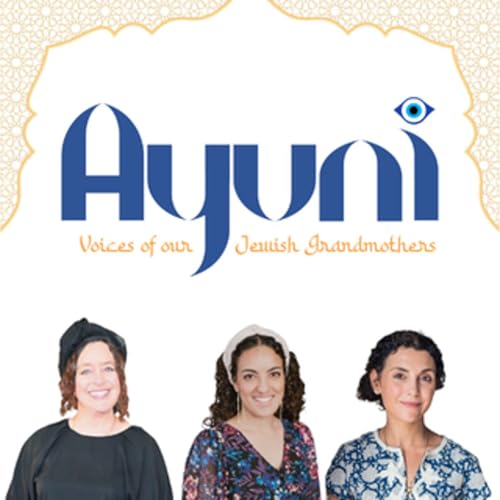
    In our opening episode, we explore the heart of Ayuni: Voices of Our Jewish Grandmothers. Ayuni—“my eyes,” “dearer to me than my own eyes”—is the tender phrase many Middle Eastern Jewish grandmothers used for their children and grandchildren. We introduce who Mizrahi MENA Jews are: ancient Jewish communities from the Middle East and North Africa, most of whom were forced to leave their homelands in the mid-20th century due to persecution. Today, their descendants live mostly in Israel, carrying fragments of language, song, and memory. Much of their story—especially women’s stories—was lost or never recorded. Ayuni seeks to uncover, honor, and restore these voices.


    Enjoyed this episode?

    Please like, comment, or leave a review wherever you’re listening to the podcast or email us at ayunivoices@gmail.com.

    Your encouragement helps us carry these ancestral stories into the world — story by story, grandmother by grandmother.


    Share Your Story

    Every family holds a universe of memory.

    If you’ve carried a song, a story, a proverb, a photograph, a silence — we welcome you to share it with us at ayunivoices@gmail.com
    What memory from your grandmother’s kitchen still warms your hands and heart?

    A dish, a spice, a scent — what story does it carry?


    Your voice becomes part of our collective archive.

    Email us at ayunivoices@gmail.com so that we can feature your story on a future episode!


    Stay Connected

    - Instagram: @ayunivoices

    - YouTube: @JewishUnityDiversity

    - Jewish Unity Through Diversity registration: https://www.unitytdiversity.com/contact-donations

    Support Our Voices
    Ayuni is a labor of heart and heritage.

    • Become a supporter: If you believe in preserving the lived stories of Middle Eastern and North African Jewish women, please consider supporting this work. Your contribution helps us document what was almost forgotten — and amplify what must be remembered.

    • Sponsor an episode: We partner with individuals and organizations who honor storytelling, heritage, and women’s voices.
      If you’d like to sponsor an episode in memory of a grandmother or in celebration of your family's story, please reach out: ayunivoices@gmail.com

    Mentioned in This Episode

    Gabai, Nili. Ha-Ishah ha-Yehudiyah be-Bagdad. Agudat ha-aḳademaʼim yotsʼe ʻIraḳ be-Yiśraʼel, The Jewish Woman in Baghdad (Hebrew), 2006.

    Links & Resources

    - Sephardic Voices: The Forgotten Exodus of the Arab Jews, Henry Green, Richard Stursberg, 2021

    - Memories of Eden, Violette Shamash, Forum, 2008

    - Uprooted:How 3000 Years of Jewish Civilization in the Arab World Vanished Overnight, Lyn Julius, Vallentine Mitchell, 2018


    Show More Show Less
    28 mins