• Conversation with Stephen Batchelor II: Towards a Socratic Buddha
    Nov 25 2025
    We offer Fire Philosophy as a space for living questions—for Nietzsche’s provocations, Zen’s paradoxes and silences, and the uneasy beauty of learning how to live with courage and imagination.We offer this free of charge. But if you find value in our brief essays, video interviews and dialogues that challenge and unsettle our lives while nourishing and invigorating them, please consider becoming a paid subscriber. Your support keeps stoking our collective 🔥.~ Krzysztof and Dale Fire Philosophy welcomes back Stephen Batchelor to further explore his new book Buddha, Socrates and Us and the surprising possibility that the Buddha and Socrates were true contemporaries. We discuss what it means to paint a “Buddhist portrait” of Socrates, and how his relentless questioning echoes the critical, dialectical side of Buddhism that often gets overshadowed by its non-conceptual, “stop thinking” reputation. We also dive into complex territory: Buddhism’s uneasy history with violence and pacifism, Socrates’s role as a soldier, and what an honest, secular Buddhist ethics might look like in a world of wars, nation-states, and messy human motivations. Along the way, Stephen reflects on how East and West now coexist inside many of us, the dangers of turning the Dharma into spiritual ego, and why the Buddha’s parable of the snake is still such a sharp warning. It’s a conversation about thought and silence, war and compassion, tradition and reinvention—anchored in the concrete ongoing question of how to live now.You can listen to our first conversation here:You can find Stephen’s work, his art, and his other interviews and teachings at www.stephenbatchelor.org.Books by our own Dale Wright:🔥 The Six Perfections: Buddhism and the Cultivation of Character Philosophical 🔥 Meditations on Zen Buddhism🔥 Living Skillfully: Buddhist Philosophy of Life🔥 What Is Buddhist Enlightenment?Buddhism: What Everyone Needs to KnowA series of five books on Zen Buddhism co-edited with Steven Heine and published by Oxford University Press—🔥The Koan🔥The Zen Canon🔥Zen Classics 🔥Zen Ritual🔥Zen Masters🔥 Theological Reflection and the Pursuit of Ideals, co-edited with David JasperBelow are some excerpts from our conversation above. We hope you enjoy it and respond with your own insights, questions and resonances. Because of the hypothesis that Buddha and Socrates lived at the same time, I was then able to more realistically imagine someone who had been born in India had maybe spent the first 10 or 15 years of the Buddhist teaching career with the Buddha, and for whatever reasons, then found themselves heading westward, crossing over the Persian Empire, and finally landing in Athens.  So it enables me, as it were, to then have to been able to see ancient Greece, Socrates, the playwrights and so on through the eyes of a Buddhist of that period. But what does Socrates or these Greeks say about human suffering?  Because Plato doesn’t mention suffering at all. The Greek philosophers don’t really seem to think it’s an appropriate topic for philosophy. It’s as simple as that. And in the School of Buddhism in which I which I was studying, the Gelugpa, they actively instruct you in dialectics and debate. And in fact this training, which goes on for some years, is very much embedded in the importance of critical thinking. And the critical thinking that I was trained in was largely, first of all becoming much more conscious of the trickiness of language itself. I think we have to see for ourselves the contradictions within our own thinking patterns, within our own concepts and ideas in order to to be able to put them down. Otherwise, we’ll just think that we might have seen through these ideas where in fact they’re still operating quite actively within us and just perpetuating the same pictures of the world.  So what I like about Socrates is that his way of getting people to come to terms with their preconceived ideas is to subject them to a very intense kind of testing or inquiry to make people become conscious of the contradictions and conflicts within their own. If you think that meditation is just about stopping thinking, then you’re really no different from a cow sitting in a field.The thing that differentiates Gotama and Socrates the most is their relationship to violence. And yet the Buddha is basically saying, don’t kill anyone and don’t if you’re a monk, especially, have any sexual engagement with another person at all. So you have a very, very strong rejection of sex and violence. And in the Greek world, you don’t have anything remotely similar. Both are seen as part of life. They’re never really held up for criticism. So that is a big difference, obviously. Buddhism is traditionally pacifist for the lay person or for the monk. To kill a human being is completely not allowed. But if you look at the actual history of Buddhism, you’ll see that ...
    Show More Show Less
    59 mins
  • A Dialogue about Cultivating Courage
    Oct 21 2025

    We offer Fire Philosophy as a space for living questions—for Nietzsche’s provocations, Zen’s paradoxes and silences, and the uneasy beauty of learning how to live with courage and imagination.

    We offer this free of charge. But if you find value in our brief essays, video interviews and dialogues that challenge and unsettle our lives while nourishing and invigorating them, please consider becoming a paid subscriber. Your support keeps stoking our collective fire.

    ~ Krzysztof and Dale

    The above conversation draws on Dale’s five part series about courage. Below are the installments to give you heart in the midst of life’s challenges. We en-courage-you to read and reflect on them before listening to our conversation above; and if you know someone who could use some encouragement, please share this series with them.


    This is a public episode. If you'd like to discuss this with other subscribers or get access to bonus episodes, visit firephilosophy.substack.com/subscribe
    Show More Show Less
    42 mins
  • What's your blind spot? Playing table tennis without vision
    Aug 26 2025
    Can blind people play table tennis? “Yes we can” says Brendan Wright who gradually lost his vision until becoming completely blind over 20 years ago. Brendan is a huge sports fan and a multi-sport athlete who participates whenever he can. He is an accomplished four stroke swimmer, having won numerous medals at the Special Olympics, and plays “Beep Baseball” with his blind friends in the Los Angeles area. Still not fully satisfied with those limits, he wanted to try table tennis to explore whether it might be possible to play that sport without being able to see the ball. And it’s worked! Although the rules of the game differ, Brendan is now an accomplished ping pong player. Check out the video above to see how he can do that.Like others who live their lives with what we call a “dis-ability,” Brendan has learned to live a fruitful, active, and basically happy life without the benefit of vision. His abilities are astonishing. Compensating for the absence of sight, Brendan’s ability to feel and to understand the contours of his environment is astonishing. And his hearing capacity is so much greater than mine that you might as well call me “deaf.” He hears the world with astonishing precision and tells me what I’m missing.Based on research over the past half century, we now realize that many animals have ways of registering the world that are very different from human ways. And in many cases, more accurately attuned, more perceptive. In other words, all living beings have “blind spots” that go along with their specific ways of encountering the world. Beyond perceptual blind spots, we all stumble through the world with a wide variety of mental blind spots, cognitive leaps and gaps that shape how we perceive and understand the world in which we live.People who realize this—and cultivate the ability to notice—are able to recognize the strengths, weaknesses, and differences between a wide range of people. Picture those with a poetic sense for the world, with an artistic sense, with an acute connection to the natural world, with the capacity to understand animals in some intuitive way, with a musical ear, with a natural inclination to be quiet and listen or to be articulate, vocal, and humorous, with a chef’s ability to differentiate between tastes, with a natural ability to learn many languages, and on and on and on. People live incredibly interesting lives with different kinds of perception that support very different skills, and although we label some differences as disabilities, that label often blinds us to other people’s natural gifts. When the power goes off and the city is pitch dark, Brendan can navigate his environment as though nothing has changed. When I can’t hear subtle sounds in my environment, Brendan teaches me what I’m missing.The career that I stumbled into for very contingent reasons—a professor of Religious Studies and Asian Studies— forced me to acquire some level of sensitivity to human differences. I found myself exploring different cultures, different spiritual sensitivities, different philosophical takes on who people are or could be. Looking back, I can see how fortunate I was to spend my life learning to understand and to appreciate these differences. Other people—all of you—spend their lives with other occupations, other pursuits and as a result develop different sensitivities, different skills and ways of living. Human diversity is the engine of our collective creativity and a posture of open generosity to others is what sustains peaceful, productive living.For all the reasons above and more, I spend considerable time and some money to help support blind athletes—men and women who participate in the Special Olympics or who play “Beep Baseball.” For anyone interested, I invite you to join me in this endeavor by making a donation to support the Beep Baseball team featured below. Although, having spent my career as a teacher there are serious limits to my capacity as a donor, I am happy to offer to match all donations up to a limit of $2000. Here is a brief video on how blind men and women play baseball and a link for donations to help this team afford to rent a field for practices, purchase equipment, and travel to Beep Baseball tournaments around the USA:➡️ https://www.socalbeepbaseball.org/donate/Krzysztof here: Dale, who some of you may know is the author of The Six Perfections: Buddhism and the Cultivation of Character, wrote about the cultivation of generosity as the first important step on the path of seeing beyond the limits of one’s world . It’s a bit squeamish for Dale to talk about his own writing, especially in the context of encouraging donations to his son’s Beep Baseball team. So I’m going rogue here by adding this commentary and a pithy reminder from that book: We can only give to the extent that we are truly free, and are not possessed by our possessions, or our money, or ourselves. This is a public ...
    Show More Show Less
    4 mins
  • Conversation with Michelle Huneven, Author of Bug Hollow, on Losing Her Home in the LA Fires and the Art of Fiction
    Aug 6 2025
    Consider supporting Fire Philosophy if our conversations with Steven Heine, Agnes Callard, Stephen Batchelor, Joanna Klink, Karen King, and now Michelle Huneven have brought value and insight into your life’s journey. ➡️ You can find Bug Hollow here. Dale is also a huge fan of Michelle’s book Blame: To understand the full context of the quotations below, we highly encourage you to listen to our whole conversation with Michelle Huneven in the video above. You just have to keep going. You need to buy clothes. You need to buy a cage for your bird. You need to buy a fishbowl for the two fish you rescued from the debris soaked pond. And I think that one of the problems is, I think the body gives you a grace period. And then when you're ready, you can start to feel stuff. And what happens is that you go to make a dish and you think, oh, I need some sumac, I've got sumac. And, no, I don't have sumac. It burnt. Or you think, oh, I had that nice little shovel. No, I don't have that shovel. It burnt. I see a homeless man, I tear up, I see a dog with three legs I tear up. But I don't mind that; I like being so tender to the world or so raw to the world.Their suddenly being gone and so sudden like you're the change in your life. I think that's a definition of grief. I think my experience of grief is that you have to think everything you possibly can about that person or that place before grief is done with you.It's like grief has you by the scruff of the neck and it's you lost this, you lost that. This is gone. That's gone. And I'm not sure it ever completely, lets go. I'm still grieving people that died many years ago, 20 years ago, 30 years ago, more. So it's not even, how do you be a good person in this world? It's how do you just live in this world? But I think that the more comfortable you are with this difficult world is how spiritual you are in a way. How do you find a way to live? And I think that every single one of my characters grapples with it. I wondered how do you know if you're a good person or if you're claimed by darkness? And I think that's something that I've always been interested in. How do you know if you're a good person? What I learned was that I'm full of characters. I've got a river of themes and interests and characters up there that I just need to tap in a kind of free associative way but it established that relationship that wasn't there. I went from having no ideas to having a lot of ideas.But another huge difference that I finally came to discover is that the difference between thinking that your life is just in this channel and it's just happening and realizing that imagination can really extend those boundaries and send you off in directions that you might not otherwise have realized were possible.It matters to you what kind of shovel you're using in the garden, and for most people, they couldn't care less. But for you, the way you do everything, what you read and eat and cook and tend your garden and take care of your chickens and travel and write, all of these are made to be beautiful, and aesthetically real in your life.I've always seen style as the way you finess your limitations. You butt-up against your limitations, and then you have to finesse it. Look at Leonard Cohen, somebody one time said he mastered the notes of A and B, he does not have great singing range. And yet, he's a total genius. People might disagree with me, but I think that he's fantastic, but he does have limitations. And yet how he finesse them is his style, is his signature style. And I think as a writer, you're writing always just up against your own limitations. You're writing at the edge of your vision, and you think as you get to be a better writer, that you have more access. But that just keeps going. You're always out of reach of what, at least I am, of what I can actually do.If you believe in God, God is creating God's self. That's standard process theology in a way, I think, I really do believe that every act of living is creative and that probably results in what you’re calling style. In a funny way, I resist it because you make me sound like a yuppie who just lives the beautiful life and buys the most beautiful things. And now that you, say it that way, I realize all of my life I've been a rebel against style, very careful not to be stylish, but that of course is a style that's very particular of somebody who's always revolting on the edges. But in Nietzsche's sense I think it means very much how you described it, and that was really wonderful.That you are out on the edges of your limitations and you're out on the edges of your imagination. You've got these choices to make, and there they are. Why not make them? And why not carve something unique? To make my character Sybil, the mother, a complex a character I had to eliminate a hundred other complexities in a way. I tried to fit them all in, but you really have to simplify in order to get them on the page because they contain ...
    Show More Show Less
    47 mins
  • Stephen Batchelor: Buddha, Socrates and Us
    Jul 11 2025
    Stephen Batchelor is a writer, teacher, and former Buddhist monk known for his contemporary, secular approach to the Buddhist teachings. A longtime critic of traditional metaphysics in religion and philosophy, Batchelor reimagines Buddhism as a philosophy of life grounded in finite human lives of uncertainty and creative freedom. His widely influential books—including Buddhism Without Beliefs and The Art of Solitude—suggest contemporary ways of living grounded in personal autonomy and the acceptance of inevitable human uncertainty. In today’s conversation we explore his latest book Buddha, Socrates, and Us and how ancient wisdom from both India and Greece might open insights for our 21st century lives.We offer the vast majority of our work on Fire Philosophy for free. If you find it of value, please share it with your friends and consider practicing the art of generosity and supporting our work with a paid subscription. 🙏Conversation Highlights How did the ancient Greeks address the question of suffering, which is arguably the preeminent starting point for the whole Buddhist endeavor? And yet Plato doesn't talk about suffering at all, only once I think it's mentioned.  It occurred to me then that if I had been an Indian and a student of the Buddha in the early years of his teaching, and if for some reason I then found myself all the way over in the west, in the city of Athens, how would I have understood how this community, which clearly had very deep philosophical inquiry going on, would have addressed the issue of suffering? So you have these two figures both alive at the same time. They clearly didn't know about each other and yet I found increasingly resonances between them. Of course this depends on how you read the Buddha… But I think my real thesis isn’t derived from a historical comparison, which is frankly, not really my forte. I'm not a historian. But really what I wanted to keep asking myself was: What do these two men who, especially the ideas they hold in common, what do they have to say to us now?  Both Socrates and the Buddha put metaphysics to one side very clearly, although the later traditions of course, revived it all. But the fact is they quite clearly had no real time for these kind of abstract philosophical questions. They were interested exclusively in how to live well. For the Buddha this manifests most explicitly in his four tasks, the last of which is to cultivate a way of life that incorporates the totality of our humanity.  And for Socrates, his questions were primarily about what does it mean to live a good life? What does justice mean? What does courage mean? What does piety mean?  We want things to be organized. We want certainty, we want clarity. We want reason. And anything that somehow threatens that gets marginalized and put to one side. We don't want quirky human beings. We want saints, we want quasi perfect individuals who somehow embody all the virtues that they speak of. I hope in our contemporary world, [with] our much greater focus on being somehow truthful and realistic, that we might be able to overcome that tendency.  I think that [lack of explicit thinking about war] leaves the Buddhist community largely powerless in engaging effectively with conflicts such as those that we're experiencing in our world today. And that's troubled me to some extent. Whereas Socrates is able to uphold the same basic virtues—he's applying the same kind of rigorous critique to other forms of thinking; he's clearly a man of enormous integrity. And yet he also recognizes that he has a duty as a member of his society to defend it if it comes under threat. And Buddhists do the same, but they have no real theory or view that somehow makes that behavior in accord with the needs of the society at that time. Probably in both cases these men were seen as troublemakers and both died shortly after they were denounced at Democratic assemblies— the Buddha, probably a year or so after the denunciation and Socrates about a month after his trial. And that suggests to me that neither of these men were people who made other people feel comfortable. I think they were both disquieting and I think you get that very much in Buddhism: its critique of the self and its emphasis on impermanence and contingency and change. So many of those core teachings are effectively dismantling the notion that there is any hope of a kind of final certainty as to what you should do and how you should live.  I would encourage young people to always think for themselves; to become freethinking, rational, autonomous, ethical beings. And that is the message I hope to get through in what I've written in this book. Autonomy is absolutely central. And I do think the great threat of social media is that it compromises our autonomy. We become so dazed and dazzled by these media that we really lose the capacity to really think for ourselves. Everything's moving so fast, we don't have the time to...
    Show More Show Less
    1 hr and 3 mins
  • Martin Heidegger Saved My Life: A Conversation with Professor Grant Farred
    May 27 2025

    It had been two decades since, as a college sophomore, I, Krzysztof, was in Professor Farred’s class “Richard Wright to Toni Morrison” when I came across Slavoj Žižek’s allusion to Prof. Farred’s short book:

    I read it and was delighted by the way my old professor was thinking about what thinking (and living by means of thinking) means, and how to do it beyond our normal understanding of what thinking usually, unthinkingly, entails. Professor Farred writes:

    “Thinking cannot be divided into ‘native’ and ‘foreign,’ indigenous or imported, proper or improper (sign and signified), Self and Other, white and black; thinking is indefatigably, resolutely, mischievously, indivisible— it leaves out nothing.”

    And later:

    “The joke is on the Nazi philosopher, because it is his insistence on thinking that enables the black man to rebut the white woman. Heidegger, the anti-Semite who invokes the “Senegalese negro” as a pedagogical prop, puts me, the black man from Southern Africa, in a position to counter a racist question. What could be more paradoxical than that?”

    Dr. Farred was beyond generous to record a conversation with Dale and his former lowly B+ student. Here it is for your enjoyment— nay, for your encouragement to think about thinking.

    Quotes from our conversation:

     It seems to me that the remarkable thing about being a teacher is that one has the opportunity to expose one student, not only to what they don't know, but what the teacher does not know.

     But what I realized in retrospect is that having written myself into a corner, I was now free to liberate myself from that corner.

     We do not know when we are thinking, so I'm not sure when I'm thinking, but I always have to guard against not thinking, which means that as a teacher, I have to be thinking as somebody who is trying to write as I do frequently on an almost daily basis, I have to be thinking about whether or not I'm thinking…  What else is there to do? Or in more explicitly philosophical terms, if I'm not thinking, how am I in the world?

    Our work is not to affirm our students, our task, the responsibility imposed upon us, is that we have to allow them to come into thinking. We have to help them to come into thinking. We have to continue to think about thinking by ourselves. And most importantly, we have to ask them this question again and again: How are you to be in the world?

     Morrison, as you point out, is a truly remarkable thinker on race. But Morrison's strength, I would argue, derives from the ways in which it is never an explicit object.

     I refuse to be circumscribed in my cannons….  So I don't have to make a choice between Morrison or Baldwin on the one hand and Heidegger on the other. There is too little time to do work to be insisting on those distinctions.

     But what he wants from us is thinking is an openness toward the world. And that's why… the answers are, as you say, not calculative or prescriptive or preordained. They're unknowable in advance.

    I wonder if we haven't, as a profession, lost the joy of not knowing and we're so called upon to be experts all the time, and we're so interested in being, God knows, what's this ugly term? Public. A public intellectual… How about the self, the act of self confrontation?


    This is a public episode. If you'd like to discuss this with other subscribers or get access to bonus episodes, visit firephilosophy.substack.com/subscribe
    Show More Show Less
    1 hr and 7 mins
  • A Complete Unknown: Bob Dylan and the question of Freedom
    Feb 11 2025
    This is a free preview of a paid episode. To hear more, visit firephilosophy.substack.com

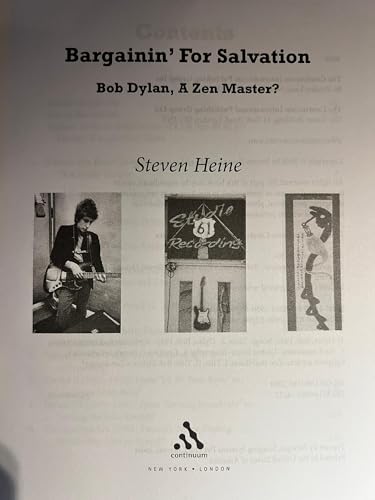
    Special guest, Zen scholar Steven Heine joins the Fire Philosophers Dale, Malek, and Krzysztof to explore the multifaceted genius of Bob Dylan through the lens of freedom, detachment, and artistic authenticity. You can find Professor Heine’s book about Dylan here.

    Our fiery discussion is sparked by the film A Complete Unknown, delving into Dylan's remarkable ability to dance between worlds — from folk prophet to electric rebel, from Zen-like detachment to prophetic engagement, from his Jewish heritage to a universal, a-political storyteller.

    Just as Dylan himself once transformed from Robert Zimmerman into the voice of a generation, our conversation reveals how his songs serve as mirrors reflecting both the times they were written in and our own inner landscapes. Throughout it all, Dylan emerges as a figure who, like Nietzsche's tightrope walker, maintains perfect balance while dancing above the abyss of conventional thinking, helping us to see the extraordinary hiding within the ordinary.

    And just like one of Dylan's longer narrative songs, we reflect in our own meandering ways on personal connections to specific songs that have left indelible marks on our lives. From the surreal humor of "Highlands" to the raw emotion of "I Threw It All Away," each song discussion opens new windows into Dylan's artistic soul. If you’re curious about how Dylan's work transcends mere entertainment to become a form of American philosophy set to music — one that challenges, consoles, and occasionally confounds its listeners in equal measure— take a listen.

    We’re experimenting at Fire Philosophy with a new arrangement that would establish two levels of engagement with what we’re doing.

    Up until now almost all Fire Philosophy content has been offered to everyone free of charge, with a very small segment preserved for those who have voluntarily offered financial support for what we’re doing.

    But going forward, we’d like to see how many of you would like to gather into a smaller online community interested in a greater level of involvement, receiving more in depth posts and more opportunity for active engagement. So, with this post today, we are reducing the subscription cost from $9 to $6 in the hopes of gathering some of you into a community of engaged participants.

    While some Fire Philosophy content will still be free of charge, from now on, more of our deep posts, events and workshops, book-club offerings, interviews and conversations with poets, philosophers, Zen teachers, and scholars will be reserved for the active community who take this additional step closer to what we are doing.

    We hope you enjoy this conversation!

    Show More Show Less
    9 mins
  • Post Election: From Pessimism and Optimism towards Active Participation
    Nov 19 2024

    Today, a couple of weeks after our dramatic election, Krzysztof and Dale take up the question from Sam Mowe that we addressed briefly just before the election—what are the grounds for pessimism and/or optimism in the world today and how can we navigate the cycles of intense feeling that politics engender?

    We invite you to overcome the passive my-voice-doesn’t-matter-seduction and send us your thoughts, critiques, and questions on these matters!


    This is a public episode. If you'd like to discuss this with other subscribers or get access to bonus episodes, visit firephilosophy.substack.com/subscribe
    Show More Show Less
    36 mins