• Prayer unto God
    Mar 16 2026
    Matthew 6:5-8 - With these verses Jesus turns His attention to the most basic, essential, and foundational spiritual practice of them all: prayer. Assuming that His disciples WILL pray, He highlights two cautionary examples of what not to do, reminding us that true prayer must be directed to God in subtle humility and as succinct, trusting children. Prayer is simply talking to God. And true prayer is ultimately recognized as a privilege--an opportunity to commune with a loving Father who wants to know and be known by us. A sermon by Cameron Heger. [Part 12 of our series “Jesus’s Sermon on the Mount: The Good Life in the Kingdom of Grace”] Questions for reflection: 1) Do you view prayer as the central or foundational spiritual discipline? In theory or in practice? 2) What is prayer? What forms can it take? And which ones are you most familiar with? 3) If Jesus wasn't advocating for absolute secrecy in prayer here, then what was He getting at? 4) Contrast praying as an educator, lawyer, or manipulator with praying as a beloved child. 5) How does believing that God is attentive, loving, wise, AND powerful strengthen our prayer? 6) How does Jesus make us daughters and sons of the Father? How does the Holy Spirit embolden us in this truth?
    Show More Show Less
    39 mins
  • Generosity unto God
    Mar 9 2026
    Matthew 6:1-4 - With these verses we begin the next major section of The Sermon on the Mount where Jesus gives direction regarding three of the most important spiritual/religious practices: generosity, prayer, and fast. Here Jesus begins with a stark reminder that any spiritual practice, if it is really going to bring spiritual benefit, must be done unto God from a heart of love, rather than from a heart that wants to look good in the eyes of others. From there, Jesus applies this principle to the realm of generosity--specifically giving to the poor and needy. A sermon by Cameron Heger. [Part 11 of our series “Jesus’s Sermon on the Mount: The Good Life in the Kingdom of Grace”] Questions for reflection: 1) Why do you think religious hypocrisy incites such a strong reaction in so many people? 2) How might we reconcile Jesus's words in Matthew 6:1 with those in Matthew 5:16? 3) Jesus assumes that His disciples will be giving to the poor. Why is this a key part of His kingdom vision? 4) Jesus prescribes subtlety in our giving. Why? 5) Why is what we do in secret or when we aren't calling attention to ourselves an especially powerful revealer of our true character and values? 6) How did Jesus embody his own principles here in His earthly ministry? On the cross?
    Show More Show Less
    33 mins
  • Perfect Love from Above (The Family Resemblance)
    Mar 2 2026
    Matthew 5:43-48 - In his 6th and final case study, Jesus takes us to where it all has led: the call to love--as God our Father loves--even our enemies. This was an earth-shattering teaching 2000 years ago and is no less difficult to live out today. But gazing at Jesus who has first loved us even when we were His enemies, we are motivated to love others like this and so bear God's family resemblance. A sermon by Cameron Heger. [Part 10 of our series “Jesus’s Sermon on the Mount: The Good Life in the Kingdom of Grace”] Questions for reflection: 1) What was so unique about this teaching at the time Jesus gave it? What is still unique about it? 2) "And hate your neighbor" is not a quotation from the Old Testament--what was Jesus doing with this? 3) What does it mean to love with this (agape, in Greek) love? 4) How does God embody and originate this type of love? 5) How does Jesus want to lead us into "perfection" or "completion"? When will this happen? 6) Who are some "enemies" that you struggle to love? How might you grow in this?
    Show More Show Less
    36 mins
  • A Tender Heart in a Hard World
    Feb 23 2026
    Matthew 5:38-42 - In Jesus's 5th case study, He begins to broach one of the most revolutionary teachings in all of human intellectual history. He reveals that the true heart of God found in the laws about just recompense is oriented toward generosity, mutual dignity, and quiet boldness. And Jesus not only taught about this revolutionarily tender heart, He fully embodied it in all of his interactions--especially on the way to the cross. A sermon by Pip Craighead. [Part 9 of our series “Jesus’s Sermon on the Mount: The Good Life in the Kingdom of Grace”] Questions for reflection: 1) How would you describe the purpose of the "eye for an eye" laws (such as in Ex. 21:24; Lev. 24:20; Deut. 19:21)? 2) Why are Jesus's words here so countercultural? How are they difficult? 3) Would you describe Jesus's prescription here as "passive"? Why or why not? 4) How would the world be different if everyone lived this way? 5) How did Jesus personally embody this principle in HIs own life and ministry? How does He personally embody it toward you?
    Show More Show Less
    38 mins
  • The Truth and Nothing But the Truth
    Feb 16 2026
    Matthew 5:33-37 - In His fourth case study, Jesus turns his attention to a subject that may not seem super applicable to us: oath-making. But in our post-truth culture, Jesus’s call to holistic, pervasive truthfulness is both radical and powerful. It turns out that truth is inseparable from love and its absence is a danger to us all. A sermon by Cameron Heger. [Part 8 of our series “Jesus’s Sermon on the Mount: The Good Life in the Kingdom of Grace”] Questions for reflection: 1) How would you describe our culture’s relationship to the concept of truth? 2) What were the norms around swearing oaths in Jesus’s day? What was the difference between swearing by God or by something else? 3) Why does Jesus ultimately forbid swearing oaths altogether? 4) What might holistic, pervasive truthfulness look like in someone’s life? 5) What habits might help us cultivate both our truth-discerning and truth-telling “muscles”? 6) Why is it significant for this conversation that Jesus refers to Himself as “the truth”?
    Show More Show Less
    33 mins
  • For the Poor, Every One of Us
    Feb 9 2026
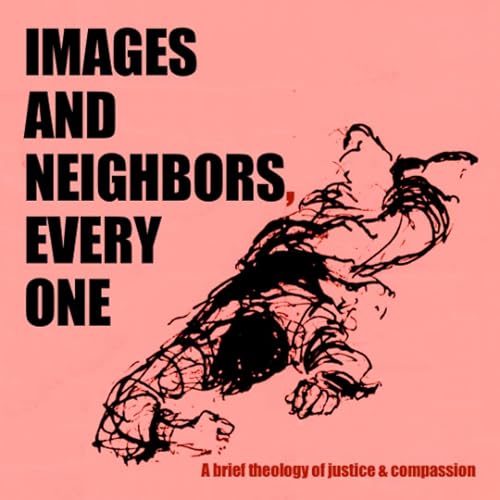
    1 John 3:16-18 - God cares deeply for the poor and demands that His people do the same. In this final message of the series, we consider the Apostle John's call to meet the needs of our impoverished brothers and sisters, knowing that this is a test of true love, and knowing that it flows out of the knowledge that Jesus laid down His own life for you. May we become a church that does justice for the poor, because the poor, the same as anyone else, are image bearers of God. A sermon by Cameron Heger. [Part 5 of our series "Images and Neighbors, Every One"] Questions for reflection: 1) How do you relate to the idea from The Brothers Karamazov that people can be easy to love in abstract while a person can be difficult to love practically? 2) How is caring for the needy evidence of "God's love in you"? 3) How does the Bible describe the causes of poverty? How does this differ from other assessments in our culture? 4) In what ways does poverty lead to additional vulnerabilities? 5) Do you think of yourself as one who "has the world's goods"? What might generosity look like for you in these things? 6) Discuss how Jesus becoming poor was part of his plan to save us. How does this motivate our generosity, care, and acts of justice toward others?
    Show More Show Less
    44 mins
  • For the Orphan and Widow
    Feb 2 2026
    James 1:26-27 - Those whose stability is impacted by the dissolution of their families are consistently included among the groups that God has special concern for. In fact, Psalm 68 describes God as "Father of the fatherless and protector of widows." So it makes perfect sense that God's new covenant family, the church, is meant to be a place where these same groups are cared for and advocated for. In this sermon, we consider what it might look like for us to be a church that does justice for the orphan and widow, which James tells us is a crucial aspect of "pure and undefiled" religion before God. A sermon by Cameron Heger. [Part 4 of our series "Images and Neighbors, Every One"] Questions for reflection: 1) Why do you think James highlights "visiting orphans and widows in their affliction" as one of his 3 key markers of "pure religion"? 2) Why did the fracturing of family make certain people especially vulnerable in the ancient world? How does it do the same today? 3) What groups today sit adjacent to "orphans and widows" in our culture? 4) How does this command relate to the New Testament conception of the church as a family? 5) How might you personally be involved in the care of orphans, widows, and related groups? 6) How does the spiritual adoption that Jesus offers us all relate to this command?
    Show More Show Less
    34 mins
  • For the Sojourner
    Jan 26 2026
    Colossians 3:8-14 - The Bible often speaks of four especially vulnerable groups of people that God's people are to make sure don't lose out on the justice they are owed. In this message, we consider the first group: the sojourner (or the immigrant). In considering the repeated calls to make sure that sojourners are shown compassion, fairness, and spiritual brotherhood, we are reminded of the ways in which both we ourselves and our savior Jesus have become strangers in strange lands. A sermon by Cameron Heger. [Part 3 of our series "Images and Neighbors, Every One"] Questions for reflection: 1) What are "sojourners" and why were they repeatedly listed among the most vulnerable groups worthy of extra concern? 2) How would you summarize the Old Testament's expectations for how the nation of Israel was to treat foreigners? 3) How does that same heart get expressed in the very different New Testament context? 4) Brainstorm together some ideas for doing justice for the sojourner across our 3 categories: serving, giving, and advocating. 5) What does Colossians 3:8-14 invite us to do with regard to our national or ethnic divisions? 6) In Matthew 25, Jesus identifies closely with the sojourner. How were His incarnation and even His crucifixion on our behalf related to this idea?
    Show More Show Less
    37 mins