• 153: The smartphone disciple (Part 3)
    Mar 9 2026

    Digital technology like smartphones has revolutionised the way we navigate daily life and the way our whole society functions. Such technology has its downsides. Even so, our stance as Christians is often something like, “Let’s use this technology wisely, but not abuse it”, as if the technology is simply a neutral instrument. But the good things of our world (like technology or money) can become much more than this: they can become master-teachers that dominate and disciple us.

    In this final episode of the series, Tony Payne brings the discussion to its practical conclusion. If our smartphones are not neutral tools, but powerful forces that shape our habits, attention and desires, what does faithful Christian living with technology actually look like?

    Building on the foundations from episodes 1 and 2, this episode asks the key question: what should we do now? How do we respond as followers of Christ? What does it look like to live wisely and deliberately with the devices that are constantly discipling us?

    For an edited transcript and show notes, visit our website.

    To ask questions or to get in touch with us about this series, send us a voice memo or email to ccl AT moore edu au.

    Find out more and register for “Left right out: The strange position of the political Christian” (Wed 20 May 2026)

    Support the work of the Centre by making a tax-deductible donation.

    Please note: The episode transcript on your podcast platform may have been generated by AI and has not been checked for accuracy. If quoting, please check against the audio.

    Show More Show Less
    41 mins
  • The smartphone disciple (Part 2)
    Feb 23 2026

    Digital technology like smartphones has revolutionised the way we navigate daily life and the way our whole society functions. Such technology has its downsides. Even so, our stance as Christians is often something like, “Let’s use this technology wisely, but not abuse it”, as if the technology is simply a neutral instrument. But the good things of our world (like technology or money) can become much more than this: they can become master-teachers that dominate and disciple us.

    In Part 1 of our series, we explored the extraordinary power and usefulness of the smartphone, as well as the powerful effects and consequences that follow from its widespread usage—the way that the phone, in fact, shapes the way we think about our lives and the way we act as humans.

    In this episode—Part 2—we’re going to think about what God says about all this—what he says about what it means to be human, and how human technology and manufacturing relates to God and to the purposes he has for humanity. How do the Scriptures shape our understanding of technology in general and the smartphone in particular? We’ll find it does so in surprising and disturbing and liberating ways.

    (Please note: Part 3 will be published in a fortnight’s time.)

    For an edited transcript and show notes, visit our website.

    To ask questions or to get in touch with us about this series, send us a voice memo or email to ccl AT moore edu au.

    Find out more and register for “Left right out: The strange position of the political Christian” (Wed 20 May 2026)

    Support the work of the Centre by making a tax-deductible donation.

    Please note: The episode transcript on your podcast platform may have been generated by AI and has not been checked for accuracy. If quoting, please check against the audio.

    Show More Show Less
    33 mins
  • 151: The smartphone disciple (Part 1)
    Feb 11 2026

    Digital technology like smartphones has revolutionised the way we navigate daily life and the way our whole society functions. We have supercomputers in our hands that can answer almost any question instantly and perform many tasks that make life easier.

    Such technology has its downsides, like the explosion of accessibility to pornography and the prevalence of online bullying. Even so, our stance as Christians is often something like, “Let’s use this technology wisely, but not abuse it”, as if the technology is simply a neutral instrument. But the good things of our world (like technology or money) can become much more than this: they can become master-teachers that dominate and disciple us.

    In this first episode of a special three-part series, we explore this issue—interrogate and ask questions about what the smartphone really is and how it does affect our lives. How does this technology disciple us? How does it reorder our attitudes, operating beliefs and behaviours—not just personally, but on a society-wide level? Finally, what have been the costs and disadvantages of all this?

    For an edited transcript and show notes, visit our website.

    (Please note: Part 2 will be published in a fortnight’s time, while part 3 will be published in a month’s time.)

    To ask questions or to get in touch with us about this series, send us a voice memo or email to ccl AT moore edu au.

    Find out more and register for “Left right out: The strange position of the political Christian” (Wed 20 May 2026)

    Support the work of the Centre by making a tax-deductible donation.

    Please note: The episode transcript on your podcast platform may have been generated by AI and has not been checked for accuracy. If quoting, please check against the audio.

    Show More Show Less
    43 mins
  • 150: Prayerfulness with Peter Adam
    Jan 14 2026

    It does us a lot of good to read a book on prayer every couple of years, because the Christian life is a praying life, and Christians need the occasional reminder and encouragement to keep praying or to start praying again after an overly busy or overly anxious period of life.

    Enter Prayerfulness, a recent book by Peter Adam that, according to CCL Director Tony Payne, is the best book on prayer and the Christian life he’s ever read. It’s warm and full of pastoral wisdom, theological richness, and many practical helps and resources.

    On this episode of the CCL Podcast, Peter Adam speaks about prayerfulness, how prayer is an expression of our relationship with God, why written prayers are helpful, and why we don’t pray.

    For an edited transcript and show notes, visit our website.

    To ask questions or to get in touch with us about this series, send us a voice memo or email to ccl AT moore edu au.

    Find out more and register for the 2026 Priscilla & Aquila annual conference: “Radical kinship: Men and women in God’s family” (2 February 2025)

    Support the work of the Centre by making a tax-deductible donation.

    Please note: The episode transcript on your podcast platform may have been generated by AI and has not been checked for accuracy. If quoting, please check against the audio.

    Show More Show Less
    41 mins
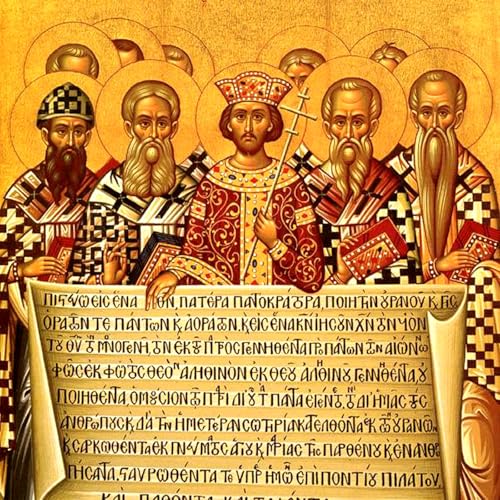
  • 149: Why the Nicene Creed matters with Mark Thompson
    Dec 15 2025

    If you’ve been saying the words of the Nicene Creed for most of your life, you’ll have some sense that this ancient creed is profound and important, and that it summarises something basic and unifying about the Christian faith.

    But why and how does it do that, exactly? Why is the Nicene Creed a big deal? Why have Christians been saying these words for around 1700 years? And what difference does it actually make to our Christian lives? Tony Payne talks to Mark Thompson, Principal of Moore College, who recently attended a conference celebrating the 1700th anniversary of the Council of Nicea, when the Nicene Creed was first written.

    For an edited transcript and show notes, visit our website.

    To ask questions or to get in touch with us about this series, send us a voice memo or email to ccl AT moore edu au.

    Find out more about studying at Moore Theological College.

    Support the work of the Centre by making a tax-deductible donation.

    Please note: The episode transcript on your podcast platform may have been generated by AI and has not been checked for accuracy. If quoting, please check against the audio.

    Show More Show Less
    36 mins
  • 148: Men and women in God’s family with Simon Flinders
    Nov 27 2025

    Christians have always been very pro-family. In fact, historically and in some parts of the world, Christianity and traditional family values are seen as much the same thing.

    This makes the actual content of the Gospels and what Jesus says about family very surprising—even shocking. It's not as if Jesus is against marriage and family, but his teaching about how to relate to our families brings a radical challenge to our total and unquestioned devotion to our families and to our practice of putting our families first, above all else. CCL Director Tony Payne chats to Simon Flinders, Archdeacon to the Archbishop of the Anglican Diocese of Sydney, about Jesus’ radical new perspective on family life.

    For an edited transcript and show notes, visit our website.

    To ask questions or to get in touch with us about this series, send us a voice memo or email to ccl AT moore edu au.

    Find out more and register for the 2026 Priscilla & Aquila Centre Annual Conference (Mon 2 Feb 2026). Simon Flinders will be delivering the plenary addresses on the topic of “Radical kinship: Men and women in God’s family”.

    Support the work of the Centre by making a tax-deductible donation.

    Please note: The episode transcript on your podcast platform may have been generated by AI and has not been checked for accuracy. If quoting, please check against the audio.

    Show More Show Less
    36 mins
  • 147: A biblical response to transgender theory with Rob Smith
    Oct 28 2025

    One of the commonplaces of our culture is to distinguish between sex and gender. However, it wasn’t that long ago, when filling in forms, that we were asked about our sex—whether we’re male or female. Now forms ask us for our gender, and they often give us more than two options.

    But did you know that the word “gender”, as applied to someone’s sexual nature or expression or identity, is a very recent invention? We only really started doing that in the late 1950s and 60s. The introduction of the idea of gender, and its separation or decoupling from the concept of sex so that we now have two potentially different things—sex and gender—is one of the extraordinary features of the story of Western culture over the past 30-40 years.

    In this episode of the Centre of the Christian Living podcast, Rob Smith tells the story of how that happened, why it’s had such a massive impact on our society, and how it all relates to God’s theory of sex in his word.

    For an edited transcript and show notes, visit our website.

    To ask questions or to get in touch with us about this series, send us a voice memo or email to ccl AT moore edu au.

    Find out more and register for the 2026 Priscilla & Aquila Centre Annual Conference(Mon 2 Feb 2026)

    Support the work of the Centre by making a tax-deductible donation.

    Please note: The episode transcript on your podcast platform may have been generated by AI and has not been checked for accuracy. If quoting, please check against the audio.

    Show More Show Less
    48 mins
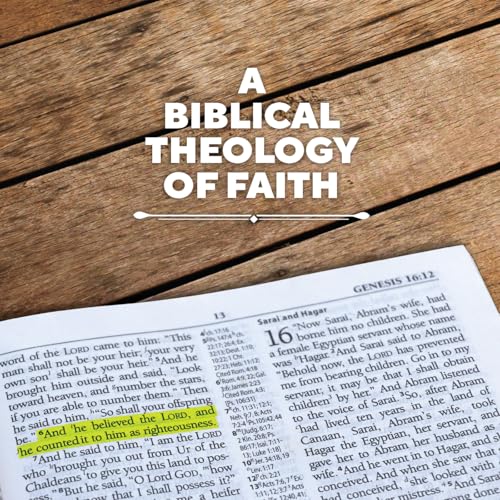
  • 146: A biblical theology of faith with Peter Orr
    Oct 9 2025

    If there’s one word or concept that you would say is at the very centre of the Christian life, it’s the idea of faith. In fact, sometimes we describe the whole of Christianity as simply “the faith”.

    Yet for something that’s so central and so foundational, it’s surprising how often people are confused or have misunderstandings about the nature and meaning of faith. In this episode of the Centre for Christian Living Podcast, we’re going to seek to dispel that confusion and sharpen our understanding of faith and its place at the foundation of the Christian life.

    For an edited transcript and show notes, visit our website.

    To ask questions or to get in touch with us about this series, send us a voice memo or email to ccl AT moore edu au.

    Next CCL event: The smartphone disciple (Mon 27 Oct).

    Support the work of the Centre by making a tax-deductible donation.

    Please note: The episode transcript on your podcast platform may have been generated by AI and has not been checked for accuracy. If quoting, please check against the audio.

    Show More Show Less
    34 mins