Behind the Wings cover art

Behind the Wings

Behind the Wings

By: Wings Over the Rockies Air & Space Museum™
Listen for free

About this listen

Wings Over the Rockies Air & Space Museum has a podcast! Based on our hit YouTube and PBS series of the same name, the Behind the Wings podcast will cover everything from aviation history to the future of space exploration with thought leaders and experts in the industry. This one's going to be cool!© 2025 Wings Over the Rockies Air & Space Museum. All Rights Reserved. World
Episodes
  • Supersonic Flight Without the Boom - Episode 70
    Feb 16 2026

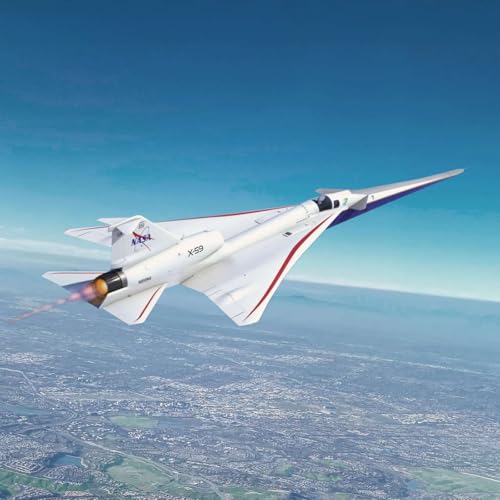
    Get an inside look at NASA’s Quesst mission and the effort to bring supersonic flight back over land, without the disruptive sonic boom.


    For more than 50 years, civil aircraft in the U.S. have been effectively barred from flying supersonic over land, not because of speed, but because of noise. NASA aims to change that paradigm with the X-59, a purpose-built experimental X-plane designed to reshape shockwaves so they reach the ground as a quiet “sonic thump” rather than a window-rattling boom.


    We’re joined by Cathy Bahm, Low Boom Flight Demonstrator Project Manager at NASA Armstrong, who leads the design, build, and flight test progression of the X-59, and Lori Ozoroski, Commercial Supersonic Technology Project Manager at NASA, who oversees mission planning, acoustic validation, and community response testing, and how that data is delivered to regulators.


    Why it matters: if regulators adopt a noise-based limit, commercial supersonic routes over land could become realistic again, potentially cutting long U.S. flights nearly in half.

    Show More Show Less
    42 mins
  • The F-100 Saved This Pilot's Life - Episode 69
    Feb 2 2026

    Retired Pilot Col. John “Warman” Stewart discusses his Vietnam combat sorties and how the Super Sabre saved his life.


    In this episode, we explore the history of the North American F-100, John’s Air Force career, his first supersonic flight, and what it was like operating one of the most important fighters of the Cold War. We also get an in-depth walkaround to understand how the Super Sabre's design features enabled its mission.

    From breaking the sound barrier to supporting troops on the ground, this one is going to be cool!


    What You'll Hear

    • The F-100 Super Sabre was the U.S. Air Force’s first supersonic fighter, marking a major leap in speed, capability, and risk during the early Cold War.
    • Flying the F-100 required constant attention, as early supersonic airplanes left little margin for error and demanded precise energy management.
    • John’s Air Force career placed him at the forefront of the jet-age transition, pushing the envelope for both pilots and their aircraft.
    • Combat operations over Vietnam highlighted the F-100’s role in close air support, where speed and firepower directly supported ground troops.
    • The Super Sabre’s legacy is one of innovation and hard-earned lessons, shaping fighters and tactics that followed for decades.

    Support Wings Over the Rockies' non-profit mission to educate and inspire future aerospace leaders: https://wingsmuseum.org/support/donate/

    Show More Show Less
    36 mins
  • Designing a Home for Artemis II - Episode 68
    Jan 19 2026

    Human Factors Engineer Cynthia Hudy shares what it takes to design a spacecraft around the people who fly it.


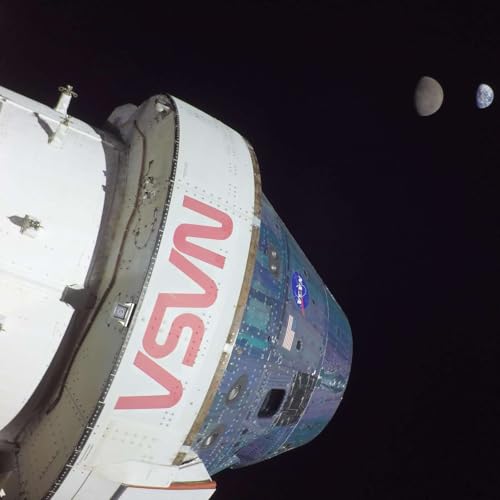
    We explore Cynthia’s role designing the systems inside Orion, from displays and controls to life support, radiation protection, and the everyday realities of living in deep space. We also discuss how astronaut feedback and human-in-the-loop testing are shaping Artemis II, the first crewed Orion mission to carry humans beyond low-Earth orbit since Apollo 17.

    From engineering for diverse crews to preparing humans for deep-space autonomy, this one is going to be cool!


    What You'll Hear

    • Artemis II is NASA’s first crewed mission beyond low Earth orbit since Apollo 17
      This 10-day flight around the Moon is the critical proving mission before astronauts return to the lunar surface.
    • Orion is designed like a “tiny house” in deep space
      Every system inside the capsule is engineered so four astronauts can live, work, sleep, eat, exercise, and respond to emergencies in an extremely confined space.
    • Human factors engineering shapes nearly every design decision
      Orion is built around human physical and mental limits, treating the crew as an essential part of the spacecraft system—not an afterthought.
    • The interior of Orion is where Artemis II differs most from earlier missions
      Life support, a functioning bathroom, exercise equipment, food and water systems, and crew-controlled displays are all coming online for the first time.
    • Astronaut testing directly changed how Orion works
      “Human-in-the-loop” trials led to real design changes, from how doors open in microgravity to how astronauts sleep, move, and access critical systems.
    • Artemis II is the proving ground for future Moon landings and Mars missions
      What Orion demonstrates about comfort, safety, autonomy, and crew well-being will shape Artemis III and long-duration human exploration.

    Support Wings Over the Rockies' non-profit mission to educate and inspire about aerospace: https://wingsmuseum.org/support/donate/

    Show More Show Less
    38 mins
No reviews yet
In the spirit of reconciliation, Audible acknowledges the Traditional Custodians of country throughout Australia and their connections to land, sea and community. We pay our respect to their elders past and present and extend that respect to all Aboriginal and Torres Strait Islander peoples today.