• Why can't Britain build a decent tank?
    Dec 5 2025

    Ajax was meant to be the British Army’s modern embodiment of the mighty Greek warrior, strong, unbreakable, unstoppable. Instead, it’s become a national embarrassment. This week the Army suspended the entire fleet after 31 soldiers fell ill inside vehicles that were supposed to protect them. We’re talking tingling hands, ringing ears and troops vomiting on Salisbury Plain. It’s a £6.3 billion “world-beating” programme that’s been spiralling into chaos for two decades. To make matters worse, a whistleblower claims the manufacturer, General Dynamics, tried to shift the blame onto soldiers which was followed by an astonishing Facebook outburst from a company employee. With inquiries now launched and Parliament demanding answers, Roland is joined in the studio by The Telegraph’s Dom Nichols and Ben Barry from The International Institute for Strategic Studies.


    Read Tom's story: https://www.telegraph.co.uk/news/2025/12/04/defence-boss-mocks-troops-deafened-ajax-armoured-vehicle/


    For blow-by-blow coverage of the peace talks, follow Ukraine the Latest: https://www.telegraph.co.uk/news/2022/03/02/russia-ukraine-war-listen-daily-podcast/


    ► Sign up to our most popular newsletter, From the Editor. Look forward to receiving free-thinking comment and the day's biggest stories, every morning. telegraph.co.uk/fromtheeditor


    https://linktr.ee/BattleLines


    Contact us with feedback or ideas:

    battlelines@telegraph.co.uk

    @venetiarainey

    @RolandOliphant

    Hosted on Acast. See acast.com/privacy for more information.

    Show More Show Less
    51 mins
  • Terror insurgency or Christian genocide? Inside Nigeria’s security crisis
    Dec 3 2025

    Nigeria is facing a security crisis. Extreme violence, mass kidnappings and deepening food insecurity has created what the UN has called the country’s worst emergency in a decade.


    Recent weeks have seen a spate of high profile mass kidnappings, including 300 schoolgirls and teachers from Niger state.


    Security officials now fear these pupils could be used as human shields to deter a military intervention being threatened by the United States.


    At the same time, aid is being slashed, and extremist groups and criminal gangs have disrupted food supplies - leaving 35 million people projected to face “severe food insecurity” next year.


    This week, Arthur and Venetia speak to Chi Lael, Head of Communications for the World Food Programme in Nigeria to get a clearer picture of the crisis.

    Plus Global Health Reporter Lilia Sebouai explains how tensions have worsened since she visited the area last year.


    Producer: Sophie O'Sullivan

    Executive Producer: Louisa Wells

    Studio Operator: Meghan Searle


    ► Sign up to our most popular newsletter, From the Editor. Look forward to receiving free-thinking comment and the day's biggest stories, every morning. telegraph.co.uk/fromtheeditor

    Contact us with feedback or ideas:

    battlelines@telegraph.co.uk

    @venetiarainey

    @ascottgeddes

    Hosted on Acast. See acast.com/privacy for more information.

    Show More Show Less
    31 mins
  • Europe is mobilising to face Russia. Is the UK falling behind?
    Dec 1 2025

    French President Emmanuel Macron has announced the return of military service in the country, 25 years after mandatory national service was phased out. And he's not alone, with the German parliament set to vote on similar measures, while Belgium and the Netherlands have introduced similar voluntary military service.


    But what do the measures entail exactly? How effective, or even necessary are they, and will the UK follow suit?


    To discuss all of this Venetia Rainey is sits down with Dr Lynette Nusbacher, a military historian and strategist, and James Crisp, The Telegraph’s Europe editor, to hear more.


    ► Sign up to our most popular newsletter, From the Editor. Look forward to receiving free-thinking comment and the day's biggest stories, every morning. telegraph.co.uk/fromtheeditor

    https://linktr.ee/BattleLines


    Contact us with feedback or ideas:


    battlelines@telegraph.co.uk


    @venetiarainey

    @RolandOliphant

    Hosted on Acast. See acast.com/privacy for more information.

    Show More Show Less
    38 mins
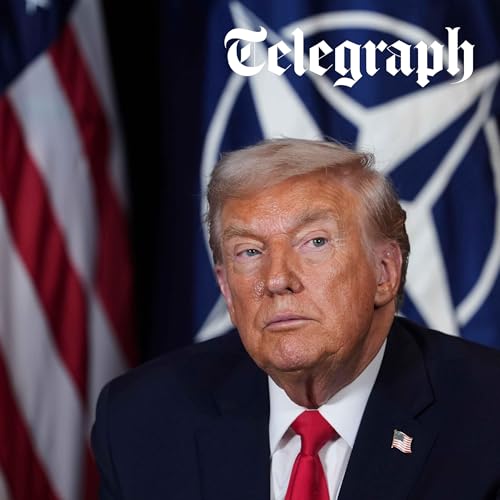
  • Inside Ukraine-Russia talks: Britain's Kissinger, Putin's enforcer and Trump's envoy
    Nov 28 2025

    Donald Trump’s latest effort to end the war in Ukraine unleashed a week of diplomatic turmoil.


    And some of the most dramatic diplomatic twists and turns bear the finger prints of one man: Jonathan Powell, the British national security advisor, not only led a diplomatic rescue mission to recast Donald Trump’s original Russian-inspired proposals in Ukraine and Europe’s favour. His influence can also be seen in Anglo-French plans for a “coalition of the willing,” and even earlier this year in Donald Trump’s Gaza Peace Plan.


    He is a low-profile figure who wields real influence. So can the man who some have called Britain’s Henry Kissinger guide the war in Ukraine to a peaceful and palatable conclusion? Is his philosophy of engagement suited to grappling with Putin’s Kremlin? And have the week’s acrobatics brought Ukraine and Russia any closer to peace?


    David Blair, the Telegraph’s chief foreign affairs commentator, and Orysia Lutsevych, the head of the Ukraine Forum at Chatham House, joins Roland Oliphant on this edition of Battle Lines.


    David Blair on Jonathan Powell:


    https://www.telegraph.co.uk/news/2025/11/25/jonathan-powell-britains-kissinger-ukraine/


    For blow-by-blow coverage of the peace talks, follow Ukraine the Latest: https://www.telegraph.co.uk/news/2022/03/02/russia-ukraine-war-listen-daily-podcast/


    ► Sign up to our most popular newsletter, From the Editor. Look forward to receiving free-thinking comment and the day's biggest stories, every morning. telegraph.co.uk/fromtheeditor


    https://linktr.ee/BattleLines


    Credit: Sgt Robert Weideman / MoD


    Contact us with feedback or ideas:

    battlelines@telegraph.co.uk

    @venetiarainey

    @RolandOliphant

    Hosted on Acast. See acast.com/privacy for more information.
    Show More Show Less
    36 mins
  • Why cutting aid to buy bombs is making us less safe
    Nov 26 2025

    With conflicts raging around the world, aid budgets are being slashed in favour of defence spending.


    But experts are warning that cutting aid may not just hurt the world’s most vulnerable, it could make life in Britain more dangerous.


    This week, Lord Dannatt, the former head of the British Army, tells Venetia and Arthur why cutting aid to boost defence actually makes us less safe.


    Plus we hear from the author of a new Chatham House report, Olivia O'Sullivan, about the risk of China filling the power gap and the impact on global health.


    Producer: Sophie O'Sullivan


    Executive Producer: Louisa Wells


    Studio Operator: Meghan Searle


    Read Lord Dannatt's Telegraph article here: https://www.telegraph.co.uk/news/2025/11/24/britain-invest-security-sudan-dangerous-world/


    ► Sign up to our most popular newsletter, From the Editor. Look forward to receiving free-thinking comment and the day's biggest stories, every morning. telegraph.co.uk/fromtheeditor


    Contact us with feedback or ideas:

    battlelines@telegraph.co.uk

    @venetiarainey

    @ascottgeddes


    Hosted on Acast. See acast.com/privacy for more information.

    Show More Show Less
    32 mins
  • China bosses vanishing as Xi Jinping’s childhood traumas trigger Mao style purge
    Nov 24 2025

    Xi Jinping is the most authoritarian and longest serving Chinese leader since Mao - and probably the most powerful man on earth. But what makes him tick, and what does is upbringing tell us about his behaviour today?


    Joseph Torigian spent nine years researching this question. The result is The Party's Interests Comes First - a biography of Xi's father, Xi Zhongxun. Torigan sat down with Roland Oliphant to discuss what he discovered about Xi's family history, and how it's shaping China and the world today.


    ► Sign up to our most popular newsletter, From the Editor. Look forward to receiving free-thinking comment and the day's biggest stories, every morning. telegraph.co.uk/fromtheeditor


    https://linktr.ee/BattleLines


    Contact us with feedback or ideas:


    battlelines@telegraph.co.uk

    @venetiarainey

    @RolandOliphant

    Hosted on Acast. See acast.com/privacy for more information.

    Show More Show Less
    33 mins
  • Nato is running out of TNT. How did we fall behind Russia and China?
    Nov 21 2025

    TNT, the unglamorous but indispensable ingredient of modern warfare, is now in critically short supply and Britain is feeling the consequences. A new parliamentary report warns that the UK’s war-fighting readiness is being eroded not only by dwindling stockpiles but by its failure to meet Nato Article 3 obligations to maintain the capacity to resist armed attack.


    The shortage of TNT is particularly alarming: Europe and the United States currently rely on a single Polish factory, a fragility that exposes the entire alliance to strategic risk. Ministers insist they are responding, with Defence Secretary John Healey outlining plans for up to 13 new British factories to produce munitions and explosives. But the pace remains slow.


    In this episode, Venetia speaks to Joakim Sjöblom, CEO of Sweden Ballistics, about his bid to build Europe's next TNT plant and gets reaction from The Telegraph’s acting defence editor Tom Cotterill on how serious the crisis really is.


    ► Sign up to our most popular newsletter, From the Editor. Look forward to receiving free-thinking comment and the day's biggest stories, every morning. telegraph.co.uk/fromtheeditor


    https://linktr.ee/BattleLines


    Credit: Sgt Robert Weideman / MoD


    Contact us with feedback or ideas:

    battlelines@telegraph.co.uk

    @venetiarainey

    @RolandOliphant

    Hosted on Acast. See acast.com/privacy for more information.

    Show More Show Less
    29 mins
  • Indiscriminate weapons: how wars became so deadly for civilians
    Nov 19 2025

    More children are being killed by explosive weapons than at any other time in history, according to a major new report by Save the Children and Imperial College London.


    It’s clear there has been a shift in the way wars are being fought, and children are being caught in the crosshairs.


    In this exclusive interview, Arthur and Paul ask George Graham, Executive Director for Global Impact at Save the Children, and Shehan Hettiaratchy, from the Centre for Paediatric Blast Injury Studies at Imperial College London why have wars become so much more deadly for civilians and children in particular?


    Producer: Sophie O'Sullivan

    Executive Producer: Louisa Wells

    Studio Operator: Meghan Searle


    ► Sign up to our most popular newsletter, From the Editor. Look forward to receiving free-thinking comment and the day's biggest stories, every morning. telegraph.co.uk/fromtheeditor


    Picture credit: MAHMUD HAMS / AFP


    Contact us with feedback or ideas:

    battlelines@telegraph.co.uk

    @venetiarainey

    @ascottgeddes


    Hosted on Acast. See acast.com/privacy for more information.

    Hosted on Acast. See acast.com/privacy for more information.

    Show More Show Less
    27 mins