

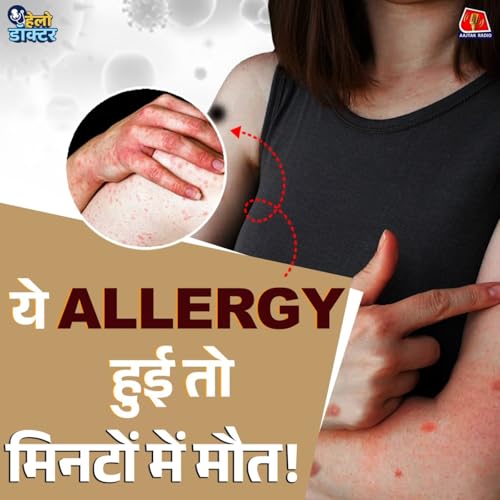
मिनटों में जान ले लेने वाली एलर्जी! लक्षण पहचानें और जान बचाएं : हेलो डॉक्टर
Failed to add items
Sorry, we are unable to add the item because your shopping cart is already at capacity.
Add to basket failed.
Please try again later
Add to Wish List failed.
Please try again later
Remove from Wish List failed.
Please try again later
Follow podcast failed
Unfollow podcast failed

मिनटों में जान ले लेने वाली एलर्जी! लक्षण पहचानें और जान बचाएं : हेलो डॉक्टर
-
Narrated by:
-
By:
About this listen
होस्ट : मानव देव रावत
प्रड्यूसर : अतुल तिवारी
साउंड : रोहन भारती
What is anaphylaxis? How is it different from a common allergy, and why is it so dangerous? What suddenly happens inside the body that a patient becomes critical within minutes? Who is at higher risk of anaphylaxis? What are the most common triggers—food, medicines, insect bites, injections—and which of these is the most dangerous? Can anaphylaxis happen even the first time, or does it occur only after repeated exposure? What early signs should we look for to recognize it quickly? If someone has anaphylaxis at home or in a market, what should be the first steps of help? Do anti-allergy medicines or steroids play any role before reaching the hospital? How long should a patient be kept under observation after an anaphylactic episode? Can anaphylaxis happen again? What lifelong precautions are necessary? How do symptoms differ in children and the elderly? Are people with asthma at higher risk? Which foods commonly trigger anaphylaxis—like nuts, seafood, milk proteins? Is it really true that a peanut allergy can be fatal? How can something so small cause such a big reaction? Can someone get anaphylaxis from fragrances, perfumes, or colors? Do people confuse panic attacks with anaphylaxis? How can we tell the difference? Find answers to all these questions in this episode of Hello Doctor with Fortis Hospital's Pulmonologist Avi Kumar.
No reviews yet
In the spirit of reconciliation, Audible acknowledges the Traditional Custodians of country throughout Australia and their connections to land, sea and community. We pay our respect to their elders past and present and extend that respect to all Aboriginal and Torres Strait Islander peoples today.