Episodes

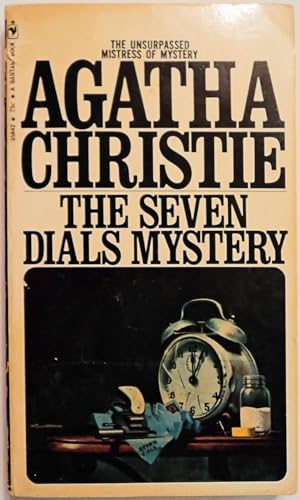
  • THE SEVEN DIALS MYSTERY (CHAPS 7-8-9) (IN FULL)
    Mar 8 2026

    Chapter 7 Summary
    Bundle's curiosity pushes her deeper into the mystery as she begins retracing the steps surrounding Ronny Devereux's death. A seemingly casual conversation reveals new inconsistencies, and Bundle starts to sense that the people closest to the case may be hiding more than they admit. Christie uses this chapter to shift Bundle from bystander to active investigator, sharpening the stakes and widening the circle of suspicion.

    Chapter 8 Summary
    Bundle's search leads her to a surprising encounter—one that hints at a larger, more organized force behind the strange events at Chimneys. Odd warnings, evasive answers, and a growing sense of surveillance suggest that the Seven Dials group is not just a rumor but a very real presence. The tone darkens as Bundle realizes she may be stepping into something far more dangerous than she expected.

    Chapter 9 Summary
    A new clue emerges, linking several earlier threads and giving Bundle her first real sense of direction. The chapter blends humor, tension, and Christie's trademark misdirection as Bundle follows a lead that takes her into unfamiliar territory. What begins as a simple inquiry turns into a moment that confirms the conspiracy is not only real—it's active, coordinated, and watching.

    🎣 Next Weeks Chapters 10 & 11
    As Bundle presses forward, the next two chapters pull her straight into the heart of the mystery. Hidden motives begin to surface, new alliances form, and the shadowy Seven Dials move from rumor to revelation. What Bundle uncovers next will challenge everything she thinks she knows—and place her closer than ever to the truth… and to danger.

    Show More Show Less
    43 mins
  • THE SEVEN DIALS MYSTERY (CHAPS 5-6) AGATHA CHRISTIE
    Mar 1 2026

    ⭐ SHOW NOTES SUMMARY — The Seven Dials Mystery, Chapters 5 & 6
    Chapter 5 — "The Man in the Road"
    Christie shifts the mystery into motion — literally — as Bundle Brent encounters a startling scene on a quiet country road. What begins as an ordinary drive becomes a pivotal moment when she comes across a distressed stranger who delivers a cryptic warning before slipping out of reach. His message hints at a danger far larger than the household mishaps at Chimneys, and Bundle suddenly finds herself drawn into a web of intrigue she never asked for.
    This chapter marks the point where the story widens beyond the country‑house setting, suggesting that the earlier death may be only one piece of a much broader and more perilous puzzle.
    Chapter 6 — "Seven Dials Again"
    The mysterious phrase "Seven Dials" resurfaces — no longer a prank, no longer a joke, but a name carrying real menace. As Bundle begins to connect the stranger's warning with the earlier events at Chimneys, Christie introduces the first solid hints that a secret organization may be operating in the shadows.
    The tone darkens, the stakes rise, and the playful atmosphere of the opening chapters is replaced by a sense of gathering conspiracy. Christie uses this chapter to signal that the mystery is no longer confined to a single death — it may involve a network of hidden actors with dangerous intentions.

    🔮 Teaser for Chapters 7 & 8 (No Spoilers)
    In the next chapters, Bundle takes her first active steps into the investigation, following a trail that leads her into unexpected drawing rooms and uncomfortable conversations. New visitors arrive, old assumptions crumble, and Christie begins tightening the threads that will eventually reveal the truth behind the Seven Dials.
    Listeners should be ready — the mystery is about to accelerate, and Bundle's role in it will become far more central than she ever imagined.

    Visit our webswite at www.bestof1001stories.com and sign up for our monthly newsletter! Thanks

    Show More Show Less
    27 mins
  • THE SEVEN DIALS MYSTERY (CHAPS 3-4) by AGATHA CHRISTIE
    Feb 22 2026

    Chapters 3 & 4 Summary (Spoiler‑Safe)
    In Chapters 3 ("The Joke That Failed") and 4 ("A Letter"), Agatha Christie shifts the tone from lighthearted country‑house mischief to something far more unsettling. What began as a harmless prank — a group of young aristocrats trying to teach a notorious oversleeper a lesson — takes a dark turn when the intended joke reveals a grim and unexpected truth.

    As the characters scramble to understand what really happened, Christie begins planting the first real clues of the mystery. A letter surfaces that raises more questions than answers, hinting that the events at Chimneys are not random at all. Motives begin to emerge, suspicions sharpen, and the carefree atmosphere of the house party evaporates as the guests realize they've stumbled into something deeper and more dangerous than a practical joke gone wrong.

    These chapters mark the moment when Christie's story pivots — from playful banter and social comedy into a genuine puzzle filled with secrets, misunderstandings, and the first whispers of a conspiracy that stretches far beyond the walls of Chimneys.

    🔮 Teaser for Chapters 5 & 6 (No Spoilers)
    In the next chapters, Christie widens the lens. New information comes to light, unexpected alliances form, and the mystery begins to take on a shape no one at Chimneys could have predicted. A seemingly minor detail becomes suddenly important, and a new character steps forward with knowledge that changes everything.

    Chapters 5 and 6 deepen the intrigue, sharpen the stakes, and introduce the first real hints of the shadowy organization whose name gives the novel its title. Listeners should be ready — the game is about to expand, and nothing is quite what it seems.

    Show More Show Less
    41 mins
  • THE SEVEN DIALS MYSTERY (CHAPS 1-2) by AGATHA CHRISTIE
    Feb 15 2026

    Pirates will return at a later date!

    For now- Agatha Christie's 1929 novel The Seven Dials Mystery, the story kicks off with a mix of high-society high jinks and a sudden, sobering tragedy.

    Set against the vibrant, slightly reckless backdrop of the 1920s, this is one of Christie's more "light-hearted" thrillers. It leans into the "bright young things" trope of the era, blending a comedic, adventurous tone with a classic whodunnit structure.

    Chapter 1: The Alarm Clocks
    The story begins at Chimneys, a grand country estate currently being rented by Sir Oswald and Lady Coote. A group of young houseguests, including the likable but lazy Gerry Wade, is staying there. Gerry is notoriously difficult to wake up in the morning, so his friends—led by Jimmy Thesiger—decide to play a prank. They purchase eight alarm clocks and hide them in Gerry's room, timed to go off at intervals starting early the next morning to ensure he finally gets up on time.

    Chapter 2: Death at Chimneys
    The prank takes a dark turn the following morning. While the alarm clocks go off as planned, Gerry doesn't emerge. When the guests eventually enter his room, they find Gerry Wade dead in his bed from an apparent overdose of sleeping draught. Curiously, seven of the alarm clocks are lined up on the mantelpiece, but the eighth is missing (later found discarded in the garden). The chapter introduces the vibrant and sharp-witted "Bundle" Brent, daughter of the estate's owner, who returns home to find the police and a brewing mystery.

    Show More Show Less
    38 mins
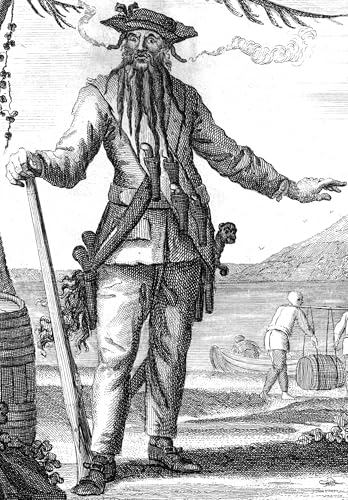
  • A GENERAL HISTORY OF THE PYRATES (CH 3 PT 2) PLUS THE TRUE STORY OF BLACKBEARD AS TOLD IN 'THE LAST DAYS OF THE PIRATE BLACKBEARD'
    Feb 8 2026

    Chapm3 begins with Virginia Governor Spotswood's decree that a reward was in effect for the capture of Blackbeard and his crew and ends with the battle between Blackbeard and Capt. Maynard at Ocracoke Inlet.

    BONUS: Source "The Last Days of Bladckbeard The Pirate" by Kevin Dufus

    The "Local Legend" Theory (Edward Beard)
    • True Identity: Claims Blackbeard was Edward Beard, not "Edward Teach." He was a colonial native, likely the son of Captain James Beard (who owned land in Bath, NC and Goose Creek, SC). Kevin Duffus Official Site
    • The "Black" Alias: Argues "Black" was a nickname or nom de guerre added to his real surname (Beard) to protect his family's social standing. North Carolina Historical Review
    • Local Knowledge: His ability to navigate the treacherous, shallow waters of the Pamlico Sound and hide in Bath (50 miles inland) proves he was a local mariner, not a stranger from England. North Carolina Department of Natural and Cultural Resources
    The "Survival" Narrative (The Crew)
    Duffus challenges the "General History" claim that the crew was largely wiped out, suggesting many used their social status and spoils to buy their way home.
    • Edward Salter (The Legislator):
    o The Myth: Reported as hanged in Virginia.
    o The Reality: Duffus found he was released, returned to Bath, and became a wealthy cooper, landowner, and member of the Colonial Assembly.
    o Legacy: He was a founding warden of St. Thomas Episcopal Church. His remains were recovered and re-interred there in 2011. St. Thomas Episcopal Church History
    • William Howard (The Island Owner):
    o The Near-Miss: Blackbeard's quartermaster was sentenced to hang but saved by a last-minute Royal Pardon in December 1718.
    o Legacy: He eventually purchased Ocracoke Island in 1759. His descendants, the Howard family, still reside on the island today. Ocracoke Island History
    • Caesar (The Trusted Associate):
    o The Survival: Though often said to have been executed, Duffus cites evidence of a "Caesar" of matching description appearing in the estate inventory of Tobias Knight in 1719.
    • Samuel Odell:
    o Aquitted after proving he was a local man forced into service just the night before the battle at Ocracoke.
    The Political Connection (The "Shield")
    • Tobias Knight: North Carolina's Secretary and Chief Justice who acted as a legal shield for the pirates.
    • The Evidence: A letter from Knight was found on Blackbeard's body after his death, proving a direct "pay-to-play" relationship between the pirate and the NC government. North Carolina History Project
    Key Departures from "A General History"
    • Characterization: Duffus views them as "Pamlico mariners" and "sons of plantation owners" rather than the bloodthirsty monsters described by Captain Charles Johnson.
    • Motivation: Suggests the pirates were motivated by local economic pressures and political Jacobite sympathies rather than pure nihilism.

    Show More Show Less
    32 mins
  • A GENERAL HISTORY OF THE PYRATES (CHAP 2-3) CAPT MARTEL & CAPT BLACKBEARD
    Feb 1 2026

    The story of Capt.Martel, who was notable in 1716 and 1717 until his disappearance, and of Capt "Teach", also known as Blackbeard, who raided ships from 1716 until his demise at Ocracoke NC in the fall of 1718. There is much to learn anout Blackbeard outside of DeFoe's account so we are adding my research to next week's episode.

    Cjeck out all our shows at www.bestorf1001stories.com

    Show More Show Less
    25 mins
  • A GENERAL HISTORY OF THE PYRATES BY DANIEL DEFOE (CHAP 1) HENRY AVERY & CREW
    Jan 24 2026

    This book is an excellent choice!

    Episode Overview
    Title: A General History of the Pyrates by Daniel Defoe (Chap 1) Henry Avery & Crew

    Duration: 43:02

    Key Figures: Henry Avery (the "Arch-Pirate" who famously vanished with his loot) and Daniel Defoe (widely believed to be the true author behind the pseudonym "Capt. Charles Johnson").

    Quick Historical Context
    The Author Mystery: While the book was originally attributed to Captain Charles Johnson in 1724, most modern scholars credit Daniel Defoe. Defoe's background as a journalist and his fascination with criminals (seen in Moll Flanders) makes him the prime suspect for having the "inside scoop" from Newgate Prison.

    Music Credits Pixabay

    Spanish Ladies-m ebUNNY

    Leave Her Johnny Nascara da Alexander

    The Sailor's Bargain Kaazoom

    Ocean Fluite Universfield

    Browse/listen to any/allof our 12 1001 podcasts here: www.bestof1001stories.com

    Show More Show Less
    43 mins
  • THE COUNT OF MONTE CRISTO (CHAP,117) THE FIFTH OF OCTOBER (FINAL CHAPTER)
    Jan 16 2026

    The Count of Monte Cristo was an enormous commercial and critical success, captivating readers with its intricate plot and universal themes. Following its publication, Alexandre Dumas earned a fortune but died poor due to an extravagant lifestyle, chronic overspending, and political upheaval.


    Success of the Novel
    The novel, published in serial form from 1844 to 1846, was an immediate sensation and remains one of the most widely read French authors globally.
    Popularity: The serialization format, coupled with Dumas' ability to create suspenseful, page-turning narratives, ensured massive popularity among the 19th-century reading public.
    Themes: Its exploration of justice, vengeance, mercy, and forgiveness, along with a complex plot and well-developed characters, resonated strongly with readers and secured its place as a classic of world literature.
    Enduring Legacy: The book has been translated into numerous languages and adapted into countless films, TV series, and stage productions, demonstrating its lasting cultural influence.
    Life of Dumas After Publication
    Dumas became one of the most famous and wealthy Frenchmen of his day, but his life after the novel's publication was marked by extravagance and financial difficulty.
    Flamboyant Lifestyle: He lived a life as dramatic as his heroes, engaging in numerous love affairs and foreign adventures. He was known for his extreme generosity, often granting money and gifts to anyone who asked.
    Château de Monte-Cristo: A testament to his success, Dumas built an extravagant mansion on the outskirts of Paris, which he named the Château de Monte-Cristo, along with a theater, the Théâtre Historique, specifically for his plays.
    Financial Ruin: Despite earning millions, his lavish spending habits outpaced his income, leading to significant debt. He eventually had to sell the Château de Monte-Cristo property just two years after its completion.
    Exile and Travel: In 1851, to escape his creditors, Dumas fled to Brussels. He later traveled to Russia and then Italy, where he founded a newspaper, Indipendente, and supported Garibaldi's campaign for Italian independence.
    Later Years and Death: Dumas returned to France in 1864 and continued to write prolifically. He died of a stroke at his son's home near Dieppe in December 1870, far from a rich man, despite his monumental literary success.

    Show More Show Less
    38 mins