• HOT POTATOES by ARNOLD BENNETT
    Mar 15 2026

    Hot Potatoes by Arnold Bennett
    Arnold Bennett's Hot Potatoes is a gentle comedy of good intentions gone wrong, centered on a devoted mother, her musically gifted son, and two very ill‑timed potatoes.
    On a bitterly cold evening, Mrs.Swann'son is preparing to play in the orchestra at an important social event hosted by local businessmen. His mother, proud but anxious, fusses over him as he leaves. At the last moment she is struck by a "brilliant" idea: Hiss hands must be kept warm for the performance—so she bakes two large potatoes and hurries out into the night to deliver them to him.
    Her son, meanwhile, has already arrived at the elegant home where the pre‑concert dinner is being held. Things fall apart quickly from that point forward.

    Enjoy all our stories at www.bestof1001stories.com and send us a kind review-thanks!

    Show More Show Less
    35 mins
  • ZERO HOUR by RAY BRADBURY
    Mar 13 2026

    🕒 Summary of "Zero Hour"
    "Zero Hour" follows a seemingly ordinary suburban day in the Morris household, where seven‑year‑old Mink and the neighborhood children are wildly excited about a new game they call "Invasion." Mink raids the kitchen for pots, pans, and odd supplies, insisting they're needed for instructions given by a mysterious figure named Drill.
    The story unfolds through the eyes of Mrs. Morris, who watches the children's play with mild amusement, even as their behavior grows stranger. Mink talks to empty spaces, uses unfamiliar words, and hints that the "game" is part of a larger plan involving beings "not exactly Martians." The children, she says, are helping these visitors because adults are too busy and too logical to notice what's happening.
    As the day progresses, the children's excitement builds toward a moment they call Zero Hour. Only at the end does Mrs. Morris realize the truth: the "game" is real, the aliens are coming, and the children have been used as the perfect entry point for an invasion. The story closes on a chilling note as the invasion begins inside the Morris home.

    📚 Themes and Significance
    • Loss of innocence — Bradbury uses children's play to mask a genuine threat, showing how innocence can be manipulated.
    • Generational disconnect — Adults dismiss what they don't understand, leaving them blind to danger.
    • Technology and vulnerability — The story reflects mid‑20th‑century anxieties about unseen forces reshaping society.

    🧭 Why "Zero Hour" Endures
    • It's one of Bradbury's most effective blends of domestic realism and science‑fiction dread, using the familiar rhythms of family life to heighten the shock of the ending.
    • It showcases his gift for foreshadowing, with small oddities accumulating until the final reveal.
    • It remains culturally resonant as a cautionary tale about underestimating the young, overconfidence in adult logic, and the dangers of ignoring subtle signs of change.

    New Twitter address- @1001podcast Follow Us!

    Get all of our shows at one website: hwww.bestof1001stories.com

    REVIEWS NEEDED . My email works as well for comments: 1001storiesp odcast@gmail.com

    SUPPORT OUR SHOW BY BECOMING A PATRON! https://.patreon.com/1001storiesnetwork. Its time I started asking for support! Thank you. Its a few dollars a month OR a one time. (Any amount is appreciated).

    YOUR REVIEWS ARE NEEDED AND APPRECIATED!

    Learn more about your ad choices. Visit podcastchoices.com/adchoices

    Show More Show Less
    29 mins
  • THE CELEBRATED JUMPING FROG OF CALAVERAS COUNTY by MARK TWAIN
    Mar 8 2026

    Enjoy ALL our story podcasts at www.bestof1001stories.com for free and sign up for ourmonthly newsletter after leaving a review!

    🐸 Summary of The Celebrated Jumping Frog of Calaveras County
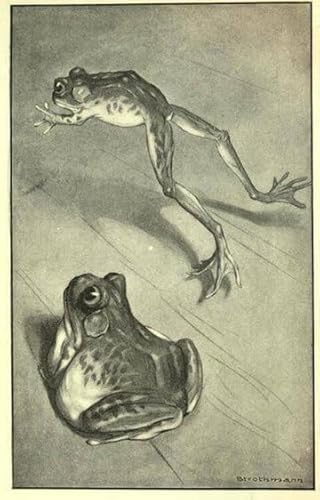
    Mark Twain's story centers on a narrator who visits a mining camp in California to inquire about a man named Leonidas W. Smiley. Instead, he is cornered by the endlessly talkative Simon Wheeler, who launches into a long, deadpan tale about Jim Smiley, a compulsive gambler who would bet on anything that moved. Smiley's prize possession is Dan'l Webster, a frog he has trained to jump higher and farther than any other. A stranger tricks Smiley by secretly filling the frog with buckshot, causing Dan'l Webster to lose the contest. By the time Wheeler finishes his rambling anecdote, the narrator realizes he has been the victim of a frontier tall tale—one told with such sincerity that it becomes its own kind of art.

    📚 Why the Story Mattered to Mark Twain
    • It launched his national career. The story was first published in 1865 and became Twain's breakout success, bringing him widespread recognition as a humorist. It is widely acknowledged as the piece that "jumpstarted his career," establishing his voice and reputation.
    • It showcased his signature style early. Twain's blend of dry humor, regional dialect, and satirical observation is already fully formed here. The story's structure—a straight‑faced narrator listening to an outrageous yarn—became a hallmark of his comedic technique.
    • It connected him to the American West. Twain's mining‑camp experiences in California and Nevada shaped his early writing. This story captures the rough‑and‑ready storytelling culture of the frontier, grounding his humor in lived experience.

    How to support our show- check us out at www.patreon.com/1001storiesnetwork and donate maybe $5 a month to help pay our basic expenses-thanks!

    Show More Show Less
    19 mins
  • THE FIRST CLASS PASSENGER by ANTON CHEKHOV
    Mar 11 2026

    The First‑Class Passenger unfolds during a winter train journey, where a modest, observant narrator finds himself seated vis‑à‑vis a well‑dressed stranger. The man, eager for an audience, begins talking about his life—boasting about his cleverness, his ambition, and the way he has outmaneuvered others to get ahead. As he speaks, his pride slowly exposes something darker: a past marked by cruelty, selfishness, and a lack of remorse.
    Chekhov builds the tension not through action but through revelation. The more the man talks, the more he condemns himself, until the narrator—and the reader—see the moral emptiness behind the polished exterior. The story becomes a quiet study of guilt, self‑deception, and the thin line between success and moral failure.

    🖋️ What Inspired Chekhov (Based on What We Know)
    There is no single recorded anecdote from Chekhov explaining the origin of this story, but its themes and structure align closely with several well‑documented aspects of his life and writing:
    • Chekhov traveled constantly, especially by rail, and often used trains as settings where strangers reveal themselves in unexpected ways. Encounters with talkative fellow passengers were a common feature of Russian travel in the 1880s and 1890s.
    • He was fascinated by casual confession, especially the way ordinary people reveal their flaws unintentionally. Many of his stories hinge on a character who talks too freely, exposing truths they never meant to share.
    • He frequently explored moral blindness, showing how people justify their actions while remaining unaware of the harm they cause. The first‑class passenger fits this pattern perfectly.
    • Chekhov's medical background gave him a keen eye for psychological detail. He often said that people reveal themselves most clearly in unguarded, everyday conversation—exactly the dynamic at play in this story.
    While we don't have a diary entry saying "this is why I wrote it," the story reflects Chekhov's lifelong interest in the quiet dramas of ordinary people and the moral contradictions hidden beneath polite conversation.

    Enjoy all our stories at www.bestof1001stories.com and sign up for our newsletter after leaving a great review! Thanks!

    Show More Show Less
    24 mins
  • THE MONKEY'S PAW by W.W.JACOBS
    Mar 7 2026

    "The Monkey's Paw", a classic horror tale from W.W.Jacobs places an old British soldier in a friends home with a tale to tell about the magical and dangerious powers of a monkey's paw he has brought with him. He warns his friends not to use it but they insist, and disaster follows.

    Learn more about your ad choices. Visit podcastchoices.com/adchoices

    Show More Show Less
    29 mins
  • THE LADY WITH THE DOG by ANTON CHEKHOV
    Mar 4 2026

    THE LADY WITH THE DOG SUMMARY

    In this quietly powerful tale of unexpected love and emotional awakening, Anton Chekhov introduces us to Dmitri Gurov, a disenchanted Moscow banker vacationing in the seaside town of Yalta. There, he encounters Anna Sergeyevna, a young woman walking with her small white dog. What begins as a fleeting affair between two married strangers soon deepens into something far more profound and unsettling.


    Set against the backdrop of the Black Sea and later the gray streets of Moscow, the story traces the inner transformation of a man who, for the first time, confronts the possibility of genuine love—and the quiet tragedy of lives constrained by social convention. Chekhov's masterful restraint and psychological insight elevate this brief encounter into a timeless meditation on desire, loneliness, and the human capacity for change.

    If you would like to support our stories here please visit www.patreon.com/1001storiesnetwork and pledge whatever you feel comfortable with- Thank You! JH 1001

    AND...

    Stop by our website at www.bestof1001stories.com and sign upfor our newsletter while checking out all our 1001 podcasts!

    Show More Show Less
    51 mins
  • A SAKI DOUBLE PLAY! THE OPEN WINDOW and A MATTER OF SENTIMENT by H.H.MUNRO (SAKI)
    Mar 1 2026

    Please consider helping to support this podcast and others in our 1001 Stories network collection by going to www.patreon.com/1001storiesnetwork and pledging a monthly contribution-Our Patreon supporters help cover our basic expenses hee as I try to bring great literature to everyone through sharratihng these narrations.

    The Open Window" — Show Notes Summary
    In this iconic tale of mischief and misdirection, a nervous visitor named Framton Nuttel arrives at a quiet country house seeking rest and recovery. But when he's greeted by the host's precocious niece, Vera, he's drawn into a chilling tale of loss, longing — and an open window that never closes.
    Saki's razor-sharp wit and love of the unexpected are on full display here, as he turns a simple social call into a masterclass in narrative sleight-of-hand. A story about nerves, storytelling, and the fine line between truth and invention, The Open Window remains one of the most beloved short stories in English literature.

    🐎 "A Matter of Sentiment" — Show Notes Summary
    It's the eve of a major horse race, and the guests at Lady Susan's country house are in a quiet frenzy. Everyone wants to place a winning bet — but with no clear favorite and their hostess disapproving of gambling, the scheming must be done in whispers and winks.
    Enter Clovis, ever the agent of chaos, who discovers a potential inside source: the butler's second cousin, a stable lad with privileged knowledge. What follows is a deliciously dry comedy of manners, deception, and social subterfuge, as Saki skewers the pretensions of the upper crust with his trademark elegance and bite.

    Music: 🎵 Danse Macabre Op. 40 – Camille Saint-Saëns (1936 Stokowski/Philadelphia Orchestra recording) (archive.org in Bing)
    This version features Leopold Stokowski conducting the Philadelphia Orchestra, with a violin solo by Alexander Hilsberg. It's a historic 1936 recording, beautifully restored and freely available for use under public domain.

    Show More Show Less
    24 mins
  • BROWN WOLF by JACK LONDON
    Feb 25 2026

    Episode Summary — Brown Wolf by Jack London

    Jack London's "Brown Wolf" follows Walt Irvine and his wife Madge and the wild, half‑tamed dog they call Wolf. The story moves between domestic warmth and the untamed instincts of the animal, tracing how Wolf's wildness both endears him to the couple and ultimately forces a wrenching choice. London balances vivid natural description with sharp human detail, turning the dog into a mirror for questions of freedom, loyalty, and the uneasy boundary between civilization and the wild.
    Key themes
    • Wildness versus domestication — Wolf embodies the tension between instinct and companionship.
    • Human‑animal bond — London explores how affection, responsibility, and misunderstanding shape relationships with animals.
    • Survival and identity — The story probes what it costs to belong, and what is lost when one tries to force a wild thing into a tame role.
    Publication and context
    "Brown Wolf" first appeared in 1891 and has since been collected in volumes such as Brown Wolf and Other Jack London Stories. The tale is often anthologized in collections of London's short fiction and is available in public‑domain editions.
    What inspired London to write it
    Jack London's fiction frequently draws on his lifelong fascination with dogs, wolves, and frontier life. His travels and experiences in the North, his close observation of sled dogs and wild canids, and his interest in naturalism and survival informed stories like "Brown Wolf." London used animal characters not merely as background color but as symbolic agents—vehicles for exploring human pride, freedom, and the harsh laws of nature. Contemporary editors and critics have noted how London's own adventures and his sympathy for the wild shaped these narratives.
    Why it matters for listeners
    "Brown Wolf" is compact but powerful: it showcases London's gift for atmosphere, his ability to animate animal psychology, and his moral ambivalence about taming the wild. For your audience, it's a vivid, emotionally direct piece that pairs well with readings of London's longer works and with discussions about nature, responsibility, and the costs of domestication.

    VISIT OUR NEW WEBSITE AT WWW.BESTOF1001STORIES.COM AND SIGN UP FOR OUR NEWSLETTER-THANKS!

    Learn more about your ad choices. Visit podcastchoices.com/adchoices

    Show More Show Less
    35 mins