

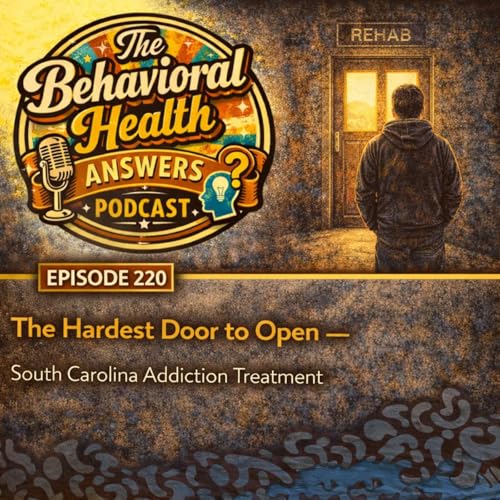
Episode 220: The Hardest Door to Open | South Carolina Addiction Treatment
Failed to add items
Add to basket failed.
Add to Wish List failed.
Remove from Wish List failed.
Follow podcast failed
Unfollow podcast failed

Episode 220: The Hardest Door to Open | South Carolina Addiction Treatment
-
Narrated by:
-
By:
About this listen
Episode 220: The Hardest Door to Open | South Carolina Addiction Treatment
Taking the first step toward recovery can feel overwhelming, especially when denial acts as a protective barrier against painful emotions like shame and fear. With an estimated 413,000 people in South Carolina alone dealing with alcohol use disorder, understanding what is the first step toward getting treatment for alcohol addiction becomes crucial for breaking through that resistance. In this episode of The Behavioral Health Answers Podcast, we explore the foundational moment of recognition that opens the door to real change.
In this episode, we discuss:
• How denial functions as a psychological defense mechanism that keeps 95% of people with alcohol use disorder from seeking treatment
• Internal warning signs like inability to control drinking and using alcohol as the primary coping mechanism
• External consequences that become visible to others, including impacts on work, family, and personal safety
• Building a comprehensive support network that includes family, friends, healthcare professionals, and peer groups
• Understanding different treatment options from inpatient programs to flexible outpatient care that fits individual needs
This episode emphasizes an important takeaway: recovery isn't about giving something up—it's about choosing to regain peace, health, and happiness. That moment of honest self-reflection, though difficult, becomes the foundation upon which all meaningful change is built.
This podcast is for educational and informational purposes only and is not a substitute for professional medical, mental health, or legal advice.