

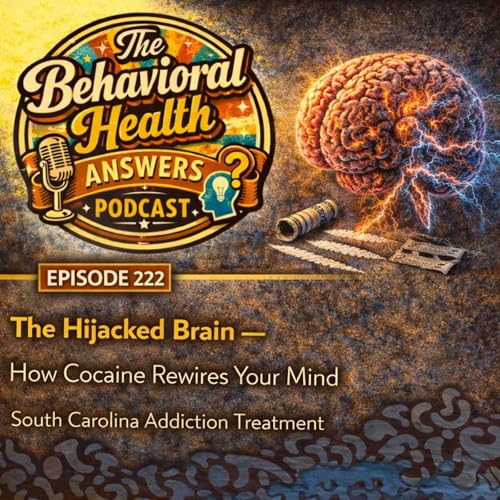
Episode 222: The Hijacked Brain - How Cocaine Rewires Your Mind | South Carolina Addiction Treatment
Failed to add items
Add to basket failed.
Add to Wish List failed.
Remove from Wish List failed.
Follow podcast failed
Unfollow podcast failed

Episode 222: The Hijacked Brain - How Cocaine Rewires Your Mind | South Carolina Addiction Treatment
-
Narrated by:
-
By:
About this listen
Episode 222: The Hijacked Brain - How Cocaine Rewires Your Mind | South Carolina Addiction Treatment
Behind the devastating statistics of 19,447 cocaine overdose deaths in 2021 lies a complex story of brain chemistry under siege. When we examine Cocaine Addiction: Signs, Causes, Effects, and Treatment, we discover how this powerful stimulant literally hijacks the brain's natural reward system, flooding neural pathways with artificial euphoria while systematically dismantling a person's ability to make clear decisions. In this episode of The Behavioral Health Answers Podcast, we explore the profound ways cocaine rewires the very circuits of human motivation and what the evidence-based path back to healing actually looks like.
In this episode, we discuss:
• How cocaine blocks dopamine reuptake to create overwhelming artificial euphoria that hijacks the brain's reward system
• The devastating behavioral, physical, and cognitive effects of chronic use including compulsive drug-seeking and severe health complications
• The shocking cardiovascular risks including a 45% higher stroke risk for young people aged 18-45 who use cocaine
• Evidence-based recovery approaches including medically supervised detox, cognitive behavioral therapy, and structured rehabilitation programs
• The importance of 90-day treatment commitment which increases long-term sobriety chances by 40% according to SAMHSA data
This episode emphasizes an important takeaway: addiction is not a moral failing but a treatable disease with a clear, structured path to recovery. While cocaine addiction absolutely rewires the brain, the brain's remarkable resilience means that healing and rewiring toward health are always possible with the right support, dedication, and evidence-based treatment approach.
This podcast is for educational and informational purposes only and is not a substitute for professional medical, mental health, or legal advice.