

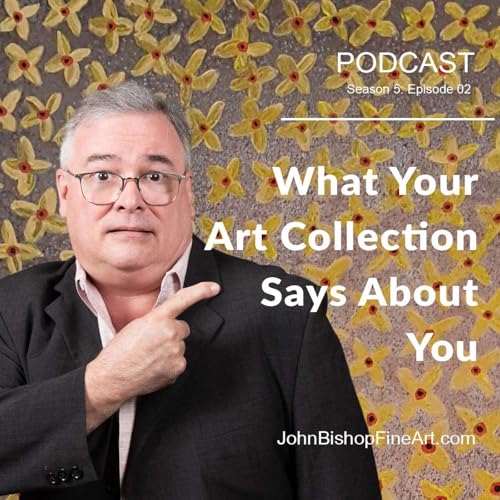
What Your Art Collection Says About You
Failed to add items
Add to basket failed.
Add to Wish List failed.
Remove from Wish List failed.
Follow podcast failed
Unfollow podcast failed

What Your Art Collection Says About You
-
Narrated by:
-
By:
About this listen
Did you know there are patterns in the way you collect art? What does your art collection say about you? You may not be consciously aware of them—I’m not sure I am either—but they are there. While there are certainly people in the art world who would love to analyze what drives our purchasing decisions, I sometimes wonder whether it’s more important, and perhaps safer, for us to understand those patterns ourselves.
Art collecting is deeply personal, and every art purchase is uniquely subjective. This subjectivity can create anxiety for collectors, especially those who have spent a lifetime building a collection. I often speak with collectors who worry that their children have little interest in inheriting their art. The idea that a life’s passion could one day be reduced to a garage sale or, worse, discarded altogether, is understandably unsettling.
But what if the issue isn’t the art itself, but the absence of its story? What if we could articulate why we collect, how the works relate to one another, and what values or experiences shaped those choices? Understanding our motivations allows us to communicate the narrative of our collections—one that can outlive us and be meaningful to others.
Art is not consumed like other luxury goods. Consumer products offer utility or comparative value; art does not. Its worth is rooted in the artist’s worldview and the symbolic or emotional value the collector derives from ownership. Sometimes that value is joy or inspiration. Sometimes it is status, identity, or belonging. When we collect art, we are also constructing versions of ourselves—placing ourselves within, or intentionally outside of, certain cultural and social circles.
An art collection is not an assortment of unrelated objects. It is a single body of work. In my former life as a librarian, I learned that what gives a collection meaning is not the individual items, but how they function together. Libraries have collection development policies—clear statements of purpose and intent. Most art collectors do not, and that’s perfectly fine. But knowing your “why” can deepen both your enjoyment of your collection and its ability to be understood by others.
We may all appreciate the beauty of a flower, but a garden is never accidental. It is intentional, tended, and shaped over time. An art collection is much the same—and it brings as much joy to the person who cultivates it as to those invited to walk its paths.
________________________________
Season 5, Episode 2
________________________________
John Bishop Fine Art is an art business run by visual artist John Bishop. John is based in Houston and he is an abstract painter and illustrator, a blogger, a vlogger, podcaster, and creative writer. He has authored several children's zines and books, as well as co authored books on photography, and art business themes. He maintains a studio at Silver Street Studios in Houston. John posts a weekly blog/vlog/podcast that creates a community, a conversation, between creatives in all sorts of fields at all sorts of levels. He wants to discuss what he's learning, what he's experienced, and whom he's met in his journey of running a freelance creative business. John's art explores how to turn mythic, archetypal symbols into individual experiences allowing us to see them in a new way, with fresh eyes. Join the conversation, the community, and share the journey together.
John Bishop: http://www.johnbishopfineart.com
John’s Instagram: https://www.instagram.com/johnbishopfineart/
Twitter: https://twitter.com/JohnBishopart
Patreon: https://www.patreon.com/johnbishopfineart
Buburuza Productions: http://www.Buburuzaproductions.com