


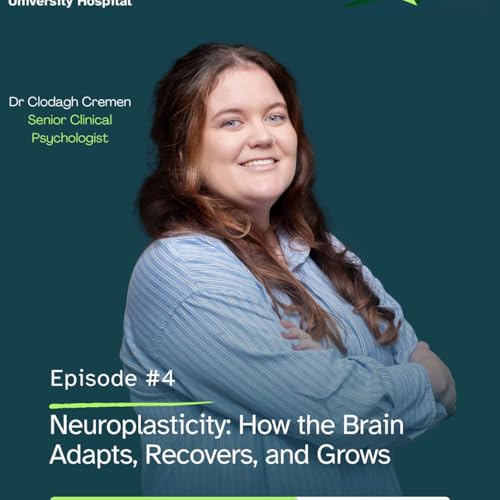
Neuroplasticity: How the Brain Adapts, Recovers, and Grows
Failed to add items
Add to basket failed.
Add to Wish List failed.
Remove from Wish List failed.
Follow podcast failed
Unfollow podcast failed

Neuroplasticity: How the Brain Adapts, Recovers, and Grows
-
Narrated by:
-
By:
About this listen
The human brain possesses extraordinary ability to adapt and change throughout life, a quality called neuroplasticity that many mistakenly believe only occurs during childhood.
Dr Clodagh Cremen, senior clinical psychologist on psychiatry of later life team at St John of God University Hospital, explains how neural pathways function like motorways with traffic rerouting when connections close, why neurons that fire together wire together, how Tilda research shows 206,800 adults over 70 volunteer annually demonstrating active community contribution, and why starting with one small consistent change like 20 minute brisk walks matters more than perfectionistic overnight transformations.
With special interest in neuropsychology, disability, trauma and resilience, Dr Cremen shares practical strategies for supporting brain health including hearing aid maintenance, challenging ageist assumptions about capability, and understanding that sleep architecture changes naturally with age requiring different amounts than teenage years
THINGS WE SPOKE ABOUT
- Brain plastic changes adapts forms new connections environment
- One small consistent change not perfectionistic overnight transformation
- Over seventies volunteer provide care contribute Irish society fabric
- Hearing aids cognitive functioning maintenance never too late
- Mindfulness skill takes practice not silver bullet stress
GUEST DETAILS
Dr Clodagh Cremen is senior clinical psychologist on psychiatry of later life team at St John of God University Hospital, working with adults over 65 experiencing mood struggles, anxiety, adjustment challenges or grief whilst providing assessment through listening and formal cognitive testing alongside intervention teaching coping skills.
With special interest in neuropsychology, disability, trauma and resilience, she worked extensively in neuro rehabilitation settings with acquired brain injury survivors and their families from historical background including interest in people born 1940s through different generations within over 65 category.
Her approach focuses on empowering people to flourish, thrive and build fulfilling lives by supporting return to meaningful activities that matter to individuals rather than prescribed goals, bringing holistic psychological perspective to multidisciplinary team whilst showing compassion for brains doing their best under difficult circumstances.
MORE INFORMATION
To find out more about the work of the St John of God University Hospital visit stjohnofgodhospital.ie
QUOTES
The brain is plastic, so it does change over time. It adapts. New connections get formed and that's often based on what's happening in our environment around us, and equally physiologically, what's happening internally inside our bodies as well. - Dr Clodagh Cremen
The way that the brain is structured is that there's different parts within the brain, we call them lobes. These lobes have different jobs and communicate with one another through what we call neural pathways. These form networks. It's a bit like having big cities that are connected to one another via motorways. Something might happen in life, and one of these motorways close. The traffic diverts, so maybe it starts using the country roads more. The messages might get delivered at a different pace. But over time, what can happen as this new road gets used is that it can become more developed. The traffic can reroute so the messages can still get through. Dr Clodagh Cremen
Pick one thing, one small thing, and the goal might be to do it consistently. I think it's about trying not to get stuck in a cycle of being perfectionistic about it, and feeling like I'm never doing a good enough job. - Dr Clodagh Cremen
KEYWORDS
#Neuroplasticity #BrainHealth #AgeingWell #MentalWellbeing #CognitiveResilience