As tremendous as the business of mothering can be, it can also be relentless and, more often than not, bloody thankless. After a lifetime of shunning team sports, religion, clubs, essentially any sort of formally organised group activity, I was surprised to discover in fellow mothers a structure of care and a sense of camaraderie I had neither known I was missing nor would require. Without them I'm not sure I would have survived my children's childhoods. But, along with the succour, there were other things, too. Uglier things: scrutiny and rivalry, condemnation and social stratification.
I am fortunate to live in one of those suburbs that the media likes to describe as "leafy"; real estate agents as "desirable". It is a place young families aspire "to get a foot in the door", where the community rightfully considers itself close, and the local school is at the heart of everything. It's wonderful to live alongside one another so intimately, yet sometimes I detect an underlying smugness, as though the appeal and worth of our postcode affords us a sense of superiority, and the hypocrisy astounds me. It is as if our collective prosperity, our zeal for have-it-all family life, for providing our children with the perfect childhood, of protecting their innocence at all costs, somehow negates any private sordidness on our parts, as if the question of whether due north is entirely fixed on our own moral compasses is immaterial.
I read The Slap, I read Big Little Lies, and while I marvelled at the universality of their themes, I yearned for a story reflecting my own experience of contemporary domesticity, of raising children in these anxious times. I burnt with ambition to write a novel, but found myself unable to settle upon what to write about exactly. For years my thoughts tossed and turned. Until, one day, a friend visiting from overseas asked to read some of my columns. 'That's it,' she said. 'What?' I asked. 'Your book,' she said, 'it's all in here.' And I saw that she was right. As a columnist, I had delighted in sending up the middle classes, in taking modern parental concerns and wringing the absurdity, the mundanity out of them. Of course, regular readers recognised that, ultimately, it was myself I was mocking.
As One of Those Mothers was starting to take shape in my head, I heard about a couple of supposedly "respectable" men - husbands and fathers, professionals - being done for child pornography and receiving name suppression. As a journalist, friends and family would frequently ask me about court cases in which the accused's identity had been concealed, so I was aware of both the curiosity and the alarm these stories can generate. And then, one day, I stumbled across an article detailing a mother's nightmare on discovering her daughter had been abused by a family friend, and I realised that while I was deeply disturbed by what I read, I was also desperate to know more about the devastation the girl's disclosure had presumably wreaked upon her parents' social circle.
They say to write what you know, and I guess, like my protagonist, Bridget, I've always found the gritty and unpalatable engrossing. I didn't want to write a nice story. And so, I wrote a tale bookended by terrible things. Well, really it is two tales in one: the first spilling out from the horror with which it begins, the second building to its heinous end.
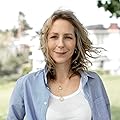
Thrice nominated for New Zealand's best columnist, Megan Nicol Reed spent seven long years mining her life for a column that originally ran in the Sunday Star Times and then the New Zealand Herald's Canvas magazine.
Loved and hated in equal measure, the former journalist's weekly words never failed to provoke a reaction among readers. She became particularly known for her gentle skewering of the middle classes.
Megan lives in Auckland with her husband, two teenage children and dog. One of Those Mothers is her first novel.
Read more
Read less